the prince’s escape after the Battle of Culloden (p3)
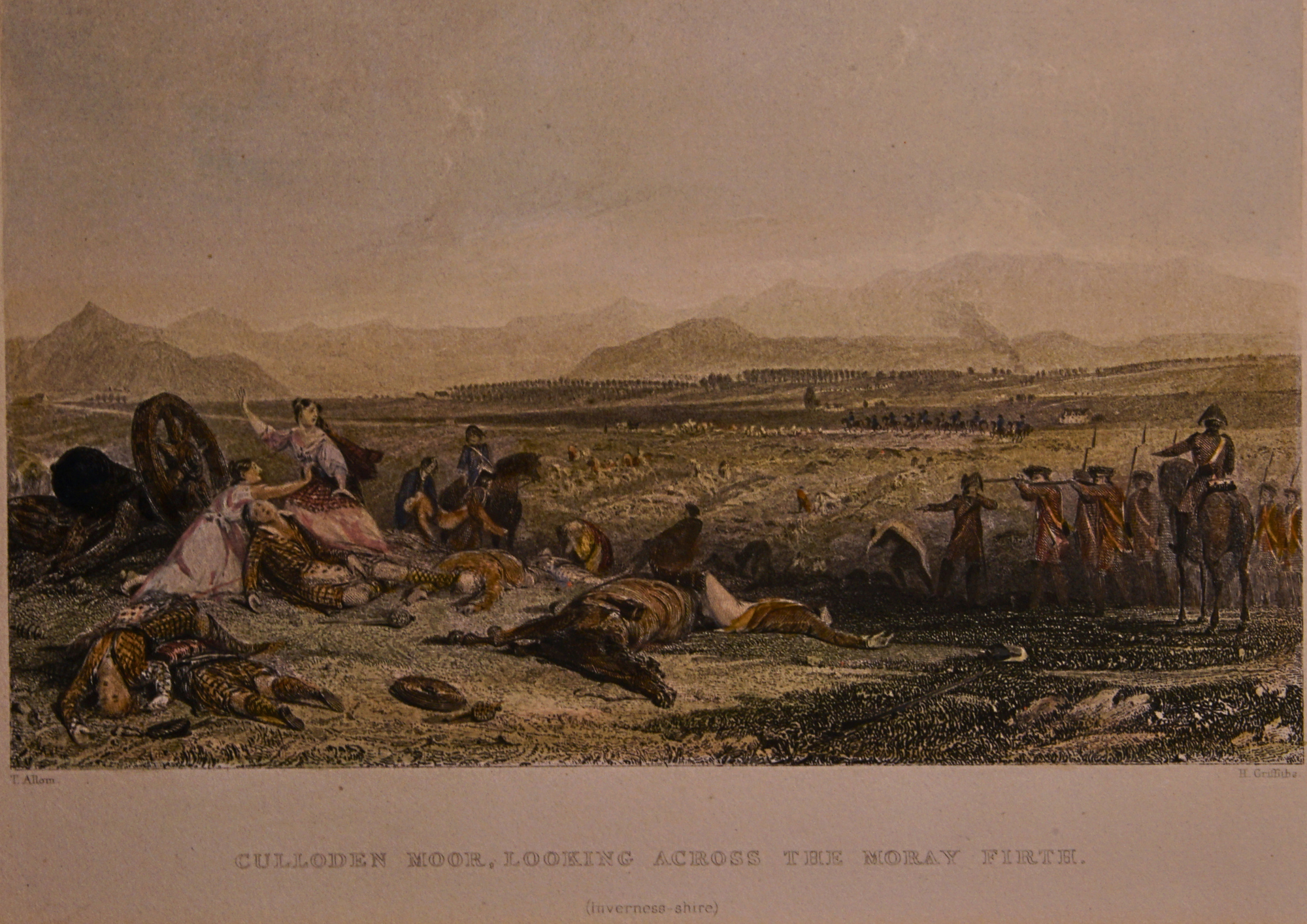
Following the tragic events of the Battle of Culloden, the entire army scattered in a panicked retreat. Prince Charles fled along a route running parallel to the southern shore of Loch Ness. One of those who accompanied him on the journey wrote: “Our forces withdrew: some towards Badenoch, some towards Inverness, and some towards Ranach. The French ambassador and a large number of our volunteers surrendered at Inverness. Bairsdale, the MacGregors and other detachments stationed near Dornoch withdrew through Lord Seaforth’s lands. His Highness took the route through the Ranach Mountains, taking with him Sir Thomas Sheridan, O’Sullivan, John Hay and Sandy MacLeod.”
These words were sent that night by the Prince to MacPerhson of Cluny, and they undoubtedly indicate that the Prince has no intention of surrendering: “We have suffered greatly, but we hope to repay Cumberland in kind very soon. Tomorrow at Fort Augustus we are to review the men of the Frasers, Camerons, Stewarts, Clanranalds and Keppochs. His Highness expects your men to be with us by Friday morning at the latest. Haste is all the more necessary as His Highness has something in mind that will more than make up for today’s confusion… For heaven’s sake, hurry to join us; and bring with you as many men as you can muster.”
Faced with such a loss, George Murray levelled a barrage of accusations at the Duke, particularly for arriving without French support and for the defeat at Culloden. He then turned his attention to O’Sullivan and Hay, accusing them of incompetence, before tendering his resignation. Despite this, Charles wrote a clumsily worded letter to the leaders, in which he failed to appreciate the patriarchal culture of Gaeldom, which ultimately expected him to provide leadership. In a haughty tone, he told the men to fend for themselves whilst he would attempt to return to France to secure the support of that country, which the Scottish leaders were already beginning to regard as a traitor – but which had always been, and remained, crucial to success, and for whose support Charles had consistently done everything in his power.
escape to the Outer Hebrides
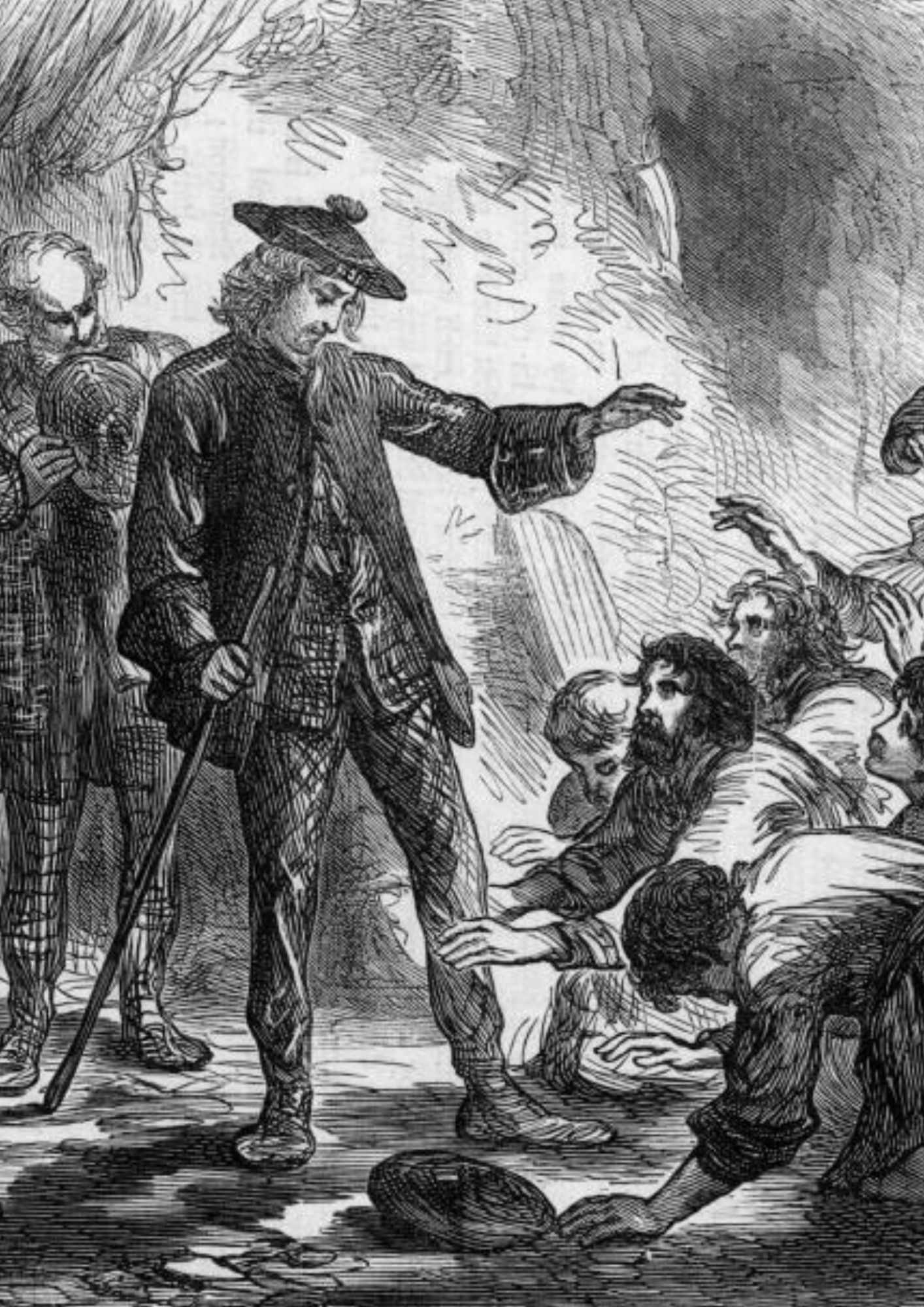
Lochiel, who had been joined in Lochaber by Murray of Broughton, was well aware of how much Charles’s proposed course of action would undermine the unity of the Jacobites, and sent his brother, Dr Archie, to Arisaig to dissuade him. Lochiel wrote to Charles that “his plan brings shame upon himself and is detrimental to the entire Scottish nation”. However, Dr Archie arrived too late. Charles set sail from Loch nan Uamh for the ‘Outer Hebrides’ together with O’Sulivan, O’Neil, Father Allan MacDonald, Alexander MacLeod, Edward Burke and seven sailors on the evening of the 26th, two days earlier. It would have been impossible to continue the fight without the prince at the helm. However, fate played a cruel trick on him. Barely four days after Charles had stood in that very spot, the resources needed to continue the campaign arrived. Frigates from Nantes anchored at Loch nan Uamh, bringing as many as 36,000 louis (the French currency of the time) and enough weapons to sustain the campaign throughout the summer.
Some decided to flee to France on ships returning from the expedition, such as Sir Thomas Sheridan, Lord Elcho, Lord John Drummond and the dying Duke of Perth. However, as Murray of Broughton wrote, “Mr Cameron of Lochiel withdrew to a small cottage with Mr Murray, where he expressed his reluctance to leave his clan in order to gather enough men to defend the country and keep themselves alive through the summer, until it became clear whether the reinforcements promised from France were indeed intended”. The plan was to inform Charles of the newly arrived ships, as well as the money and weapons, and to persuade him to return. However, this was prevented by the sudden appearance of three Hanoverian frigates, whereupon the French set off for the continent. On the shores of Loch Arkaig, the chieftains of Barisdale and Moidart began to rally their forces once more. By 8 May, Lochiel and Murray of Broughton had convened a meeting. In attendance were Lord Lovat, Clanranald, Lochgarry, Barisdale, Keppoch’s nephew, Colonel Roy Stewart and Gordon of Glenbuchat. They decided that “their clans would assemble on 15 May at Achnacarry, which belonged to Lochiel, in the Braes of Lochaber, whilst the Frasers of Aird and other loyal men north of Ness would join the people of Glenmoriston and Glengarry, and the Frasers of Stratherrick, the Mackintoshes and the Macphersons would assemble at the most convenient location in Badenoch”. Members of the MacGregor, Menzies and Glenlyon clans were to march to Rannoch and join forces with the local inhabitants: the Gordons, the Ogilvys, the Pitsligos, the Farquharsons and other northern Jacobites.
Lochiel orders the army to disperse
But Prince Charles was already gone. Nor were they all cut from the same cloth as Lochiel. Four hundred Camerons, MacLeans and Macdonells from Barisdalle had arrived at Achnacarry, along with further Camerons due to join them from Sunart and Ardnamurchan under the command of Major Alexander Cameron of Dungallon. Before they could set out, however, to join forces with the MacDonalds of Keppoch at Braelochaber, Lochiel’s forces found themselves trapped: 600 Hanoverians were approaching from the south, and 2,000 from the north. They retreated to the shores of Loch Arkaig, from where they beheld the grim and desolate sight of the entire country engulfed in flames. Faced with insurmountable adversity, Lochiel ordered his troops to scatter across the hills and valleys, whilst he himself made his way to a small island on Loch Shiel, adjacent to the home of Cameron of Dungallon in Glenhurich. This order brought the events of the Forty-Fife Uprising to an end.
Whilst in Arisaig, Prince Charles lost all hope and intended to flee towards Skye; but on learning that his supporters there had turned against him, he decided to cross over to the Hebrides. On one of those bleak, almost deserted islands, he might be safe until he found a ship to take him to France.
Donald, an old sailor, would have been able to find an eight-oared boat, but he reported that the Minch – the stretch of water between the mainland and the Hebrides – was being patrolled by English ships. Crossing without being spotted and captured would be almost impossible. The sky had clouded over, and out at sea the white crests of the waves were crashing against the shore. A storm was approaching, and until it had subsided, Donald was opposed to setting out to sea in an open boat, but English soldiers had been sighted near Airsaig. He had to choose between the risk of drowning at sea and being taken prisoner on land. No storm, however dangerous, could be as cruel as the Duke of Cumberland. They set out in the evening, riding the current.It was a stormy night, and hurricane-force winds had driven the small boat far to the west. Fortunately, Donald was a sailor. Dawn finally broke. They landed on the island of Benbecula, situated between North Uist and South Uist, glad to be alive.
Flora Macdonald’s assistance in transporting the prince to the Isle of Skye
The prince was to spend several weeks on this island, during which time he undertook an adventurous journey to Stornoway and back – partly by sea, narrowly escaping capture by an English ship, and partly on foot across the mountainous island of Lewis. Although he was often in danger, he never feared betrayal, even though hundreds of islanders knew of his presence. On his return to the southern island of Uist, he lived precariously in a hut invisible from the sea. Ten English ships patrolled the coast in search of him, whilst the prince undoubtedly lay amongst the heather, watching them. Throughout this time, he moved from one miserable hiding place to another, but from time to time food and even a change of clothes were found for him.
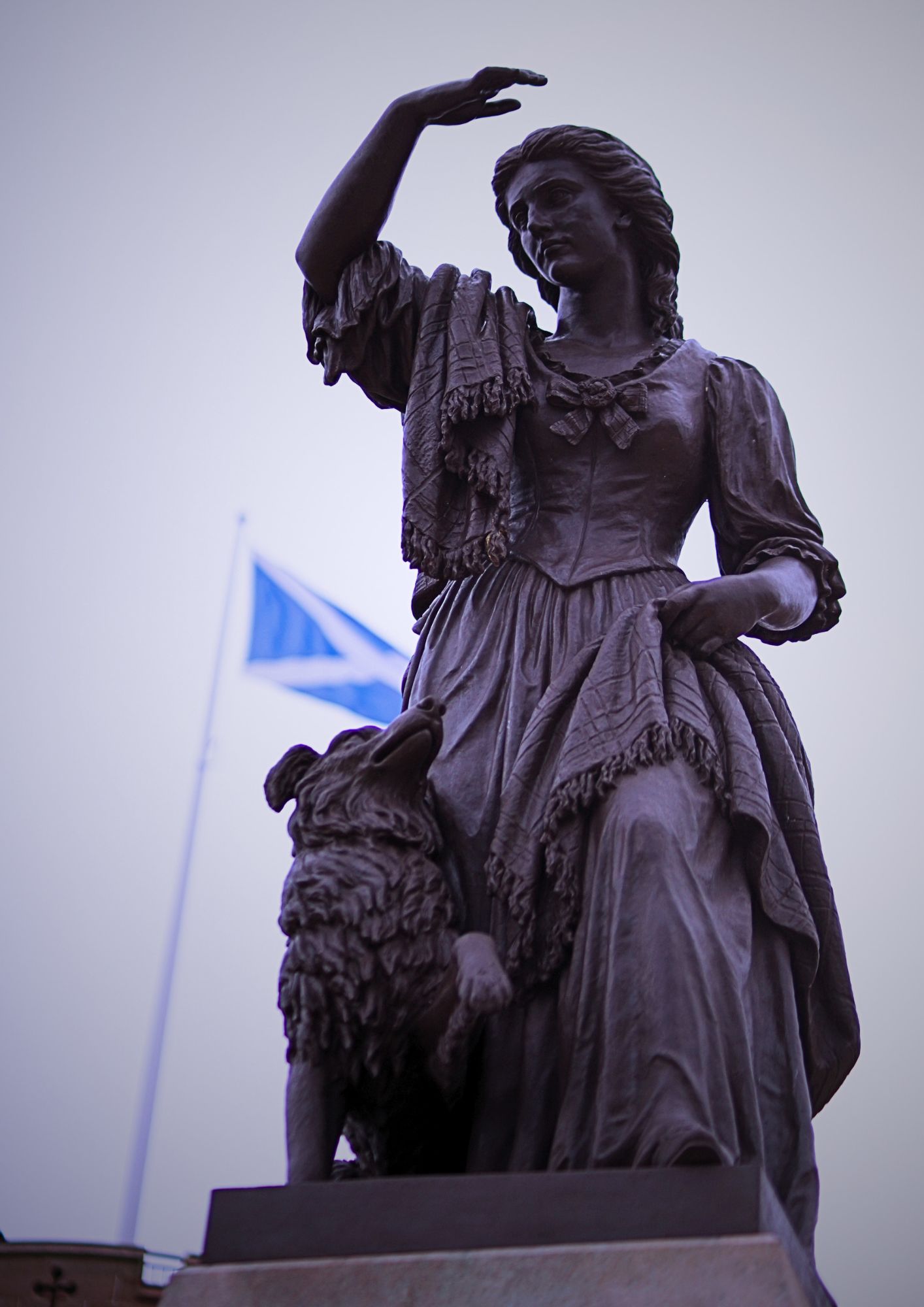
One evening, probably by chance, he found himself in a cottage where a woman had gone to look after her brother’s cattle. The name of Flora MacDonald will never be forgotten as long as people are inspired by tales of brave heroism and devotion. After some natural hesitation, Flora MacDonald agreed to help the prince make his way to the Isle of Skye, where her mother, also a loyal Jacobite, had a house near the shore. There, the fugitive could hide safely. As South Uist had become too dangerous for him, a change of hiding place was urgent. As it might be necessary to deceive the English soldiers patrolling the coast of Skye, it was decided that it would be better to disguise the prince as one of Flora MacDonald’s maids. The prince’s handsome features and long fair hair were very well suited to the role. Unfortunately, he was a poor actor.
As he waded through the shallow water of the stream, he pulled his kilt up above his knees, and was told that no Scottish girl would behave so immodestly; as he waded across another stream, he let his skirt hang down into the water. He was then told that no Scottish girl would be so imprudent.
The night they crossed the Minch to the Isle of Skye was stormy. As they approached the shore, they were stopped by an English patrol and fired upon as they turned back and sailed away. English muskets of that period were not accurate weapons, and there were no casualties. The prince quickly realised that he did not look convincing as a girl. He put on his men’s clothes again and, after another period of hiding in mountain huts, returned to the mainland. There was no doubt that the risk would be greater there, but there would also be more scope to evade enemy patrols.