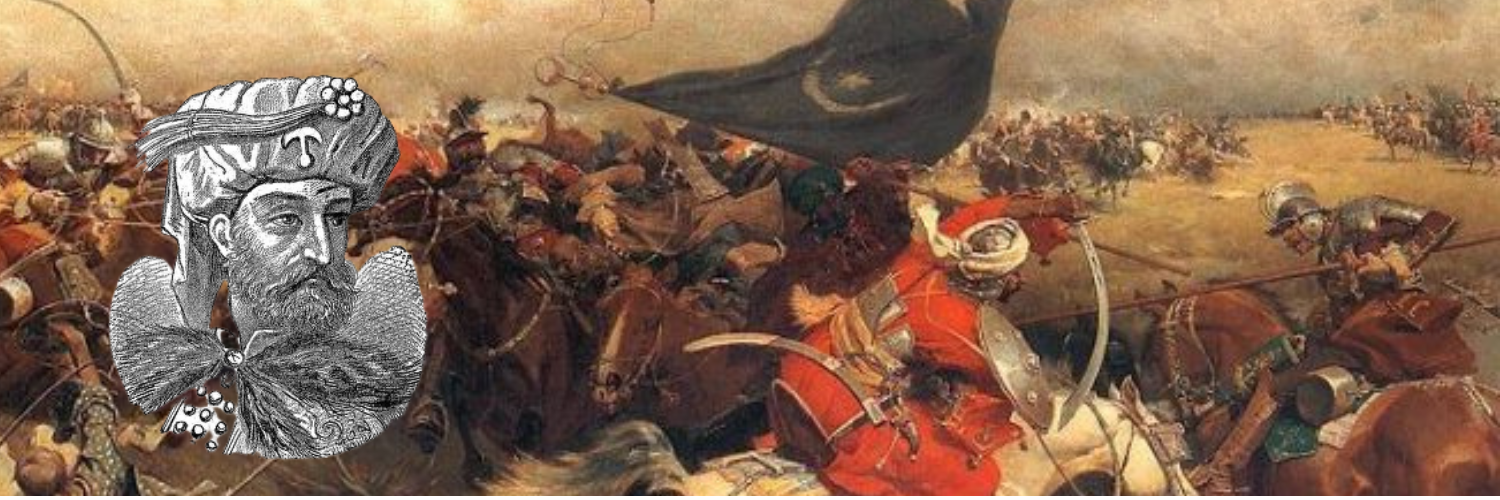
CHRONICLE OF THE LIFE OF MERZIFONLU KARA MUSTAFA PASA
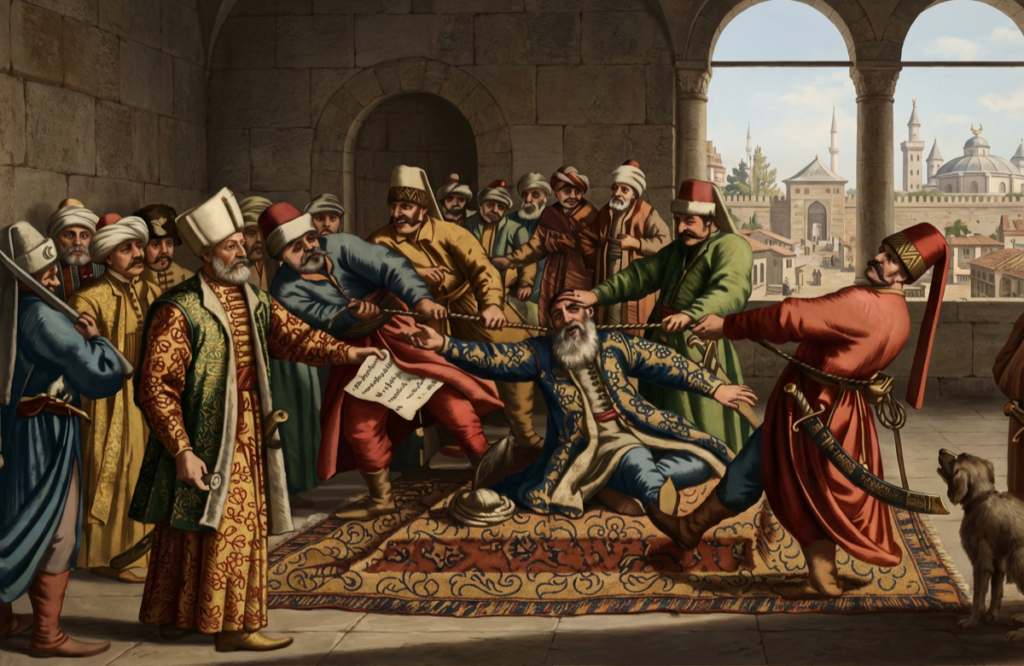
In this section of historical biographies, we will take a look at a figure named Kara Mustafa Pasha. His full name was Merzifonlu Kara Mustafa Pasha. He was also nicknamed Black Mustafa because Kara means black and he was said to be handsome with black hair. This great figure was a statesman and military commander who served as Grand Vizier from 1676 until his death in Belgrade on 25 December, when he was presented with a silk cord by Sultan Mehmed IV. As in the previous biography, we will try to trace his roots and we will probably be able to deduce a little more about the formation of his personal ambitions and why it was he who clashed with the Hussars in 1683 during the siege of Vienna
origin of black mustafa - Köprülü family - kadizadei movement
Merizifonlu Kara Mustafa Pasha was born in 1634-1635 (the exact date is unknown). He was reportedly the son of a cavalryman who died during the siege of Baghdad in 1638. He was raised in the Koprülü household and married the daughter of the Grand Vizier of the Ottoman Empire between 1656 and 1661. We do not know exactly where he was born, but we do know that he began his pursuit of power in this family. However, it is interesting to note that the village where he was supposedly born changed its name to his name (Karamustafapasa), which is very interesting and worth investigating. The town of Trabzon also caught my attention and is worth checking out as his place of birth. We will pause for a moment, as I need to take a closer look at the Köprülü family, which will probably help us better understand the formation of Kara Mustafa’s personality and ambitions. The Köprülü family was a noble family of Albanian origin, which produced six viziers and many officers. They were characterized by dynamism and development in the Ottoman Empire, leading a series of military campaigns that expanded the power of the empire. The family was deeply involved in the Islamic administration and also engaged in the conservative Kadizadei movement.
The Kadizadei movement sought to revive the practices of the first generation of Muslims from the 1st century and condemned innovations and folk religions. The influence of the family was fundamental to the functioning of the Ottoman state, combining military power with Islamic rule and administration. If I understand correctly and my intuition is not mistaken, these beliefs forged conservative and orthodox ambitions in our historical hero. We know from the history of Vienna, which you can find on my website, that “Black Mustafa” was characterized by obsessive hostility and a desire to convert other peoples to Islam, and he hated Europeans, for which he punished them with high taxes. He reportedly had two children with Princess Köprülü, who died young, followed shortly thereafter by their mother. He had four concubines and three sons with them, named Yusuf, Mehmed, and Ali.
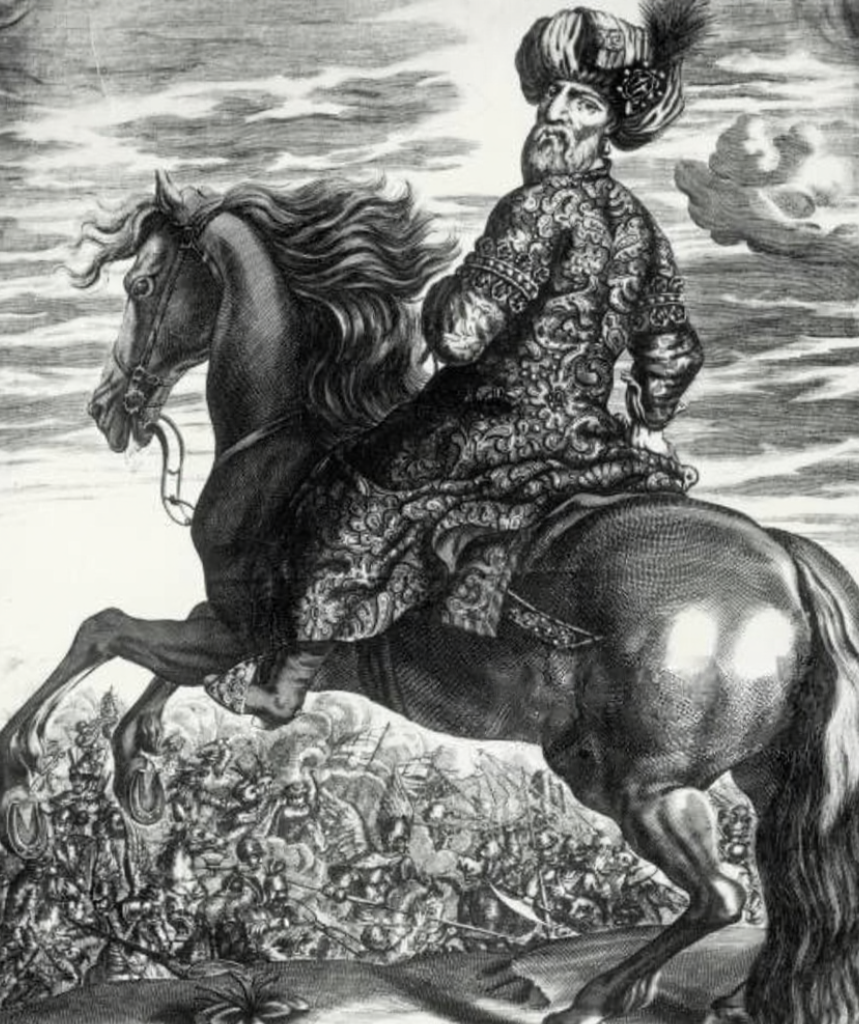
black mustafa the great vizier
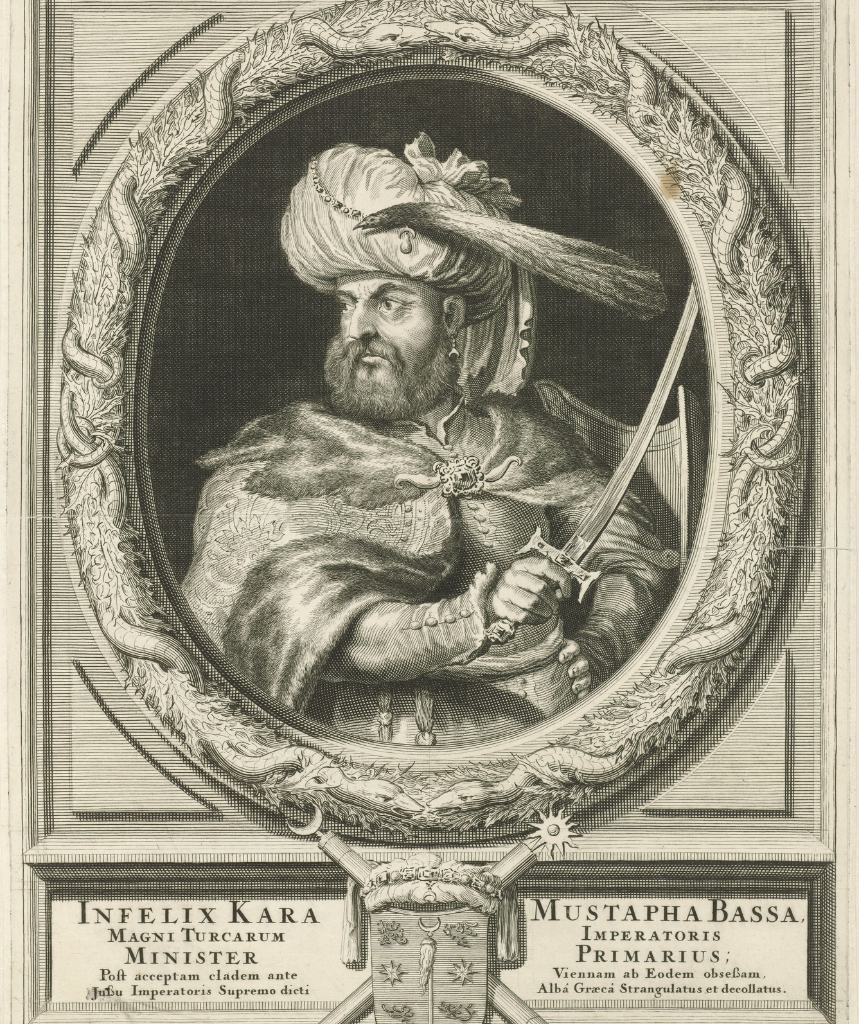
In 1658, he was appointed governor of Silistra (a city in northern Bulgaria). He was the deputy of his brother-in-law, Grand Vizier Koprülü Zade Fazil Ahmed Pasha, when he set off on an expedition to Hungary. He was also the commander of the Ottoman Aegean Sea Fleet until 1666, which besieged the port city of Candia for a very long time (1648-1669). (By the way, this is a great topic for another Highlander story entitled Heraklion defends itself against the Ottoman attack for 21 years). He served as commander of the land forces in the Polish-Ottoman war of 1672-1676. He participated in the capture of Kamieniec Podolski in 1672, which was taken by the Turks after 10 days, and in the siege of Chocim shortly thereafter in the same year. These were undoubtedly great victories for Kara Mustafa Pasha, forcing the signing of the Treaty of Buczacz, which stipulated the surrender of Podolia and the payment of an annual tribute of 22,000 ducats to the Turks. Black Mustafa and Jan Sobieski probably heard the most about each other during this period of 72-76 and fought each other like lions.
The main character of my chronicle becomes Grand Vizier in 1676 when his brother-in-law Köprölu Fazila Ahmed dies. Holding this position, he became the second most important figure in the state, subordinate only to the Sultan. He also had absolute representative power and headed the imperial council. As Grand Vizier, Kara Mustafa Pasha attacked Chyhryn in 1678 with the aim of recapturing the fortress. Chyhyryn had been captured two years earlier in 1676 by Russian-Ukrainian troops commanded by Ivan Samoilovich, thus starting the Russian-Turkish War, which lasted until 1681. The history of Kara Mustafa is undoubtedly linked to the territories on the Dnieper River, which he constantly fought for and which were constantly attacked and taken over by the Russian side. He took part in the battles for the cities of Uman and Ladazhin, both of which are located on the right bank of the Dnieper River in what is now Ukraine. As far as I know, those territories on the Dnieper River were very popular at the time and everyone fought over them. Russia fought with the Polish-Lithuanian Commonwealth, and shortly afterwards, the Ottoman Empire fought with Russia.
siege of viena the reverse of the Ottoman Empire
The rest of Kara Mustafa Pasha’s life was connected with the Siege of Vienna, on which he focused all his attention. It was not without reason that the Sultan gave command of the entire army to the Vizier. The Sultan knew how much Kara Mustafa disliked the peoples of the West and how much he wanted to take over their territories. He did not know that this obsession would cause a multitude of mistakes in the entire Vienna operation of 1683. From what we know, Kara Mustafa should have prepared himself better for the relief and taken larger caliber cannons, knowing how powerful the walls of Vienna were. On the way, he could also have captured castles instead of heading straight for the Apple of Europe without securing his rear. Nowadays, everyone knows the story of Sobieski’s hussars galloping to destroy the Ottoman army at Vienna. However, not everyone knows the story of the later battle, the Battle of Parkany, in which Kara Mustafa took part once again, but for the last time before his death. However, he was indirectly involved in the Battle of Párkány (today’s Štúrovo in Slovakia) in October 1683. He did not personally command the Ottoman forces there, but ordered his subordinate, Kara Mehmed Pasha, to hold the city during the general retreat of the Ottomans after the unsuccessful siege of Vienna. The defeat at Párkány was a serious blow to Ottoman morale and prevented Kara Mustafa Pasha from effectively reorganizing his forces. Although it must be admitted that in the first phase of the Battle of Dragonia, which lasted several days, it was taken by surprise and defeated, so it had to retreat. This battle strengthened the strategic advantage of the Holy League, which soon after captured Esztegrom in Hungary.
THE SIZE OF THE OTTOMAN EMPIRE DURING THE REIGN OF BLACK MUSTAFA
execution in Belgrade
Summary
To sum up the figure of Black Mustafa, I must admit that he accomplished things that few rulers of the 17th century could even dream of. It must be said that his path through life was not easy. This figure leaves behind many questions. One of the questions is whether the Battle of Vienna really marked the beginning of the decline of the Ottoman Empire in the 17th century? Or was it the Sultan’s overly aggressive policy and fighting on too many fronts? These are questions that I will try to answer in the future. I would also like to note that, from my point of view, the figure of Kara Mustafa is inextricably linked to Jan III Sobieski, and together they shape the history of this period. As I often say, every story teaches us something, and thanks to this one, the gates to the next story, such as the siege of Candia or the Battle of Parkany, have been opened. In the future, Highlander intends to examine the stirrup of the Grand Vizier, which is located in the Wawel Museum. That is all for this article, but this is not the end of my historical adventure, as the next one will describe the Battle of Vienna. Until then, greetings from the mountains.