
A FORGOTTEN ISLAND WITH A GREAT PAST
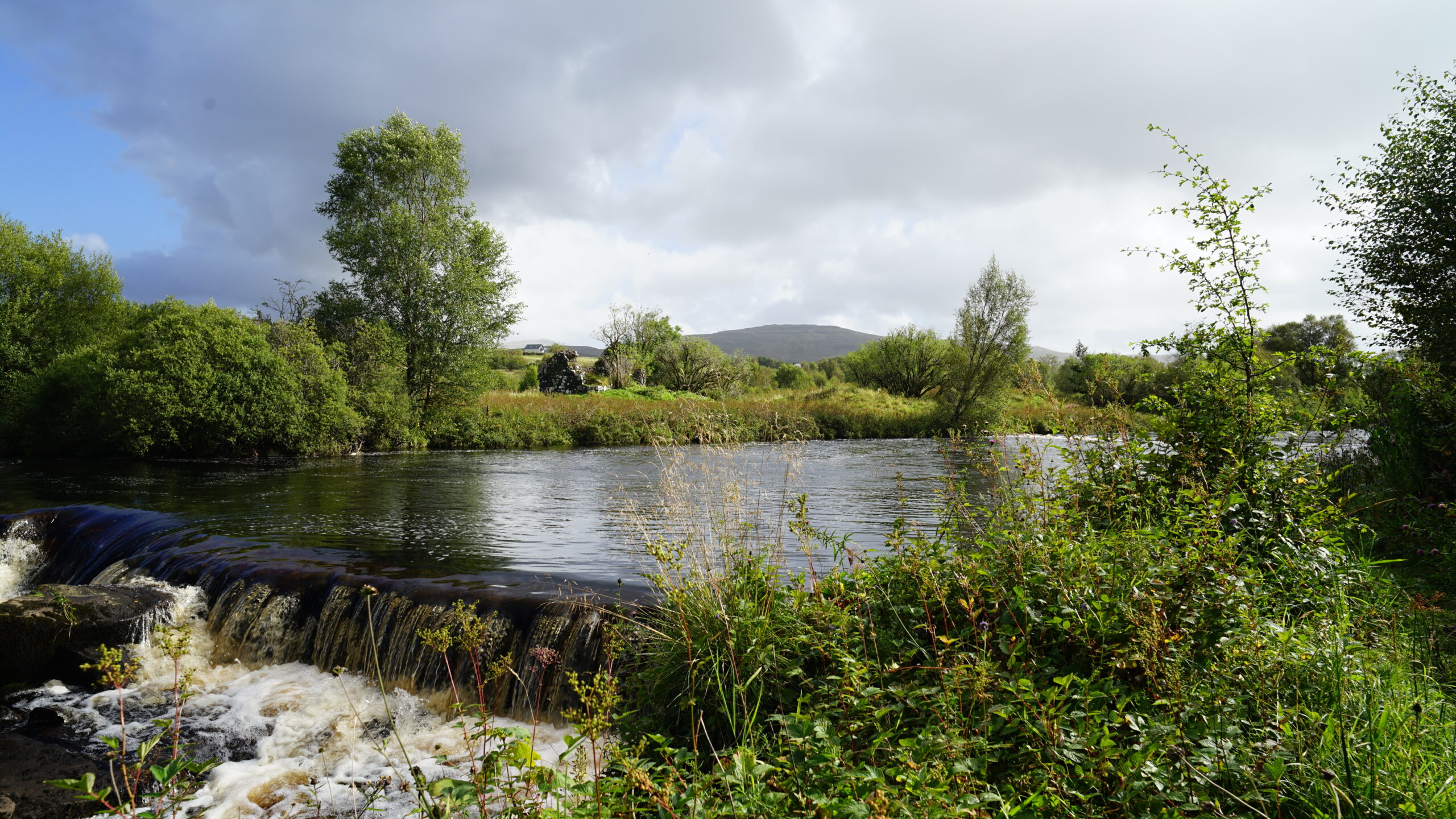
Rain mercilessly cuts through the gloomy sky outside the window, and the mountain peaks in the distance are covered with snow. This is the view that greets the Highlander as he begins his description of another story and a place that is unique, mysterious, very important and, in part, forgotten. Forgotten by the general public, but special to a few and also special to me. I visited this place and I must admit that it is amazing and exudes a very old energy, but it is hard to say whether it is good or bad. I would like to introduce you to an island called St. Columba, located on the River Snizort, which in turn flows into Loch Snizort. This island on the river is located on a larger island that you have probably heard of. The name of this island is Skye, located in the north-western part of Scotland, which is connected to the Highlands by a fairly large bridge.
It is extremely important and forms a separate entity, like a bridge connecting the more remote islands of the Outer Hebrides archipelago. It is the mother island for smaller islands such as Rum, Canna and the extremely important little island called Eigg. from which missionary Donan arrived on the small island where Eilean Donan Castle is located. Incidentally, it was on this small island that the massacre of the missionary took place, who, together with 52 members of his community, suffered a martyr’s death, often described as the ‘red martyrdom’. The history of the Isle of Skye goes back millions of years, when volcanoes shaped the rocks and ice made them beautiful. The name Skye itself is linked to both pre-Celtic and Norse roots. Unfortunately, it is impossible to describe the whole history in a few sentences, so I will deal with this topic separately soon (I promise). However, I will add that an integral part of the past were the Vikings, whose blood was mixed with the local tribes, but before that happened, the migrations of Christian missionaries in the early Middle Ages were incredibly important for this history, as they completely changed the history and vision of the island from Pagan to Celtic – Christian. However, before I continue, I kindly ask for respect for this place, and if you ever visit it, please bear in mind that it is also an important place for the local population, where their ancestors are buried.
ANCIENT CEMETERY AND HOLY GROUND
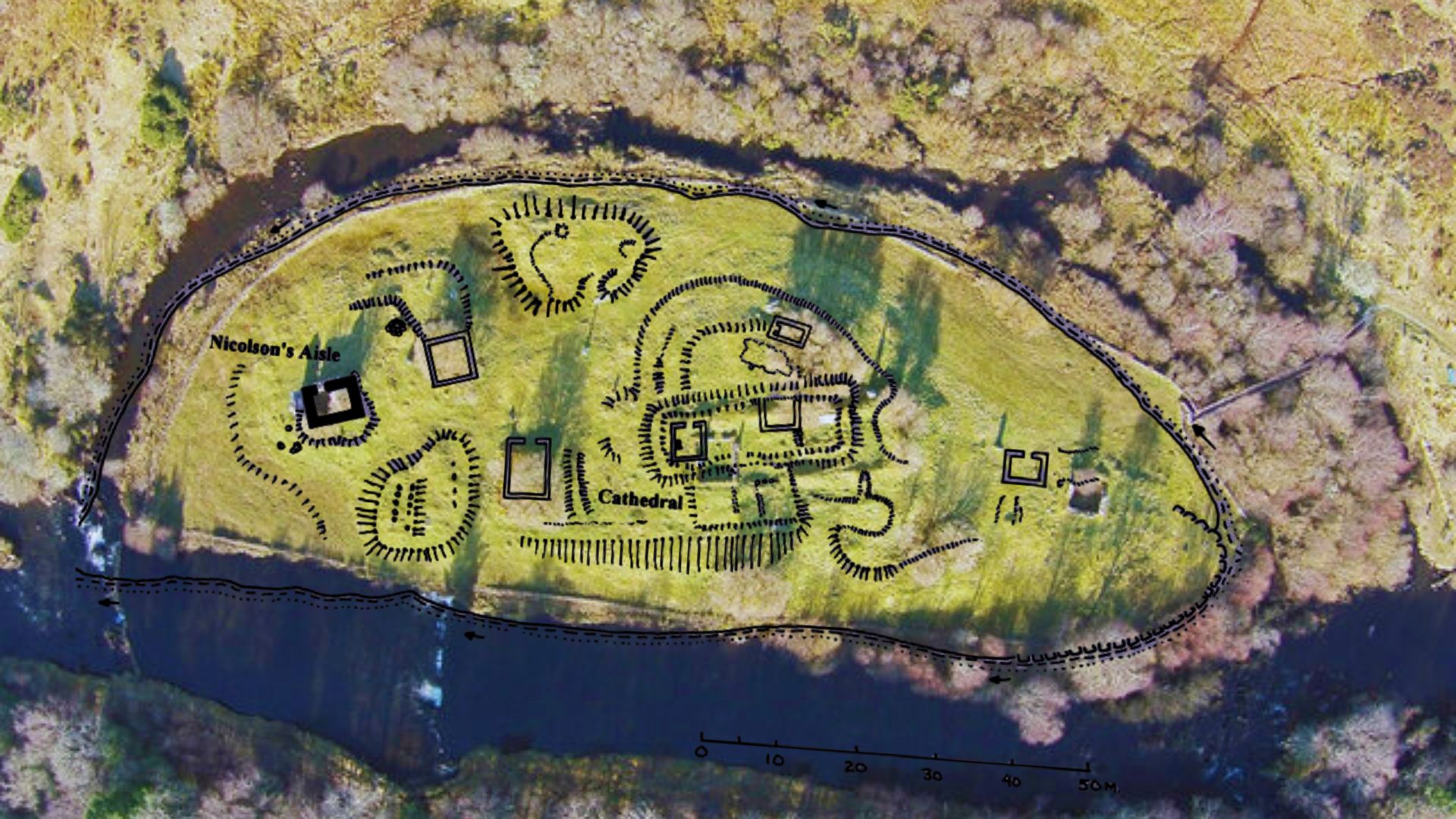
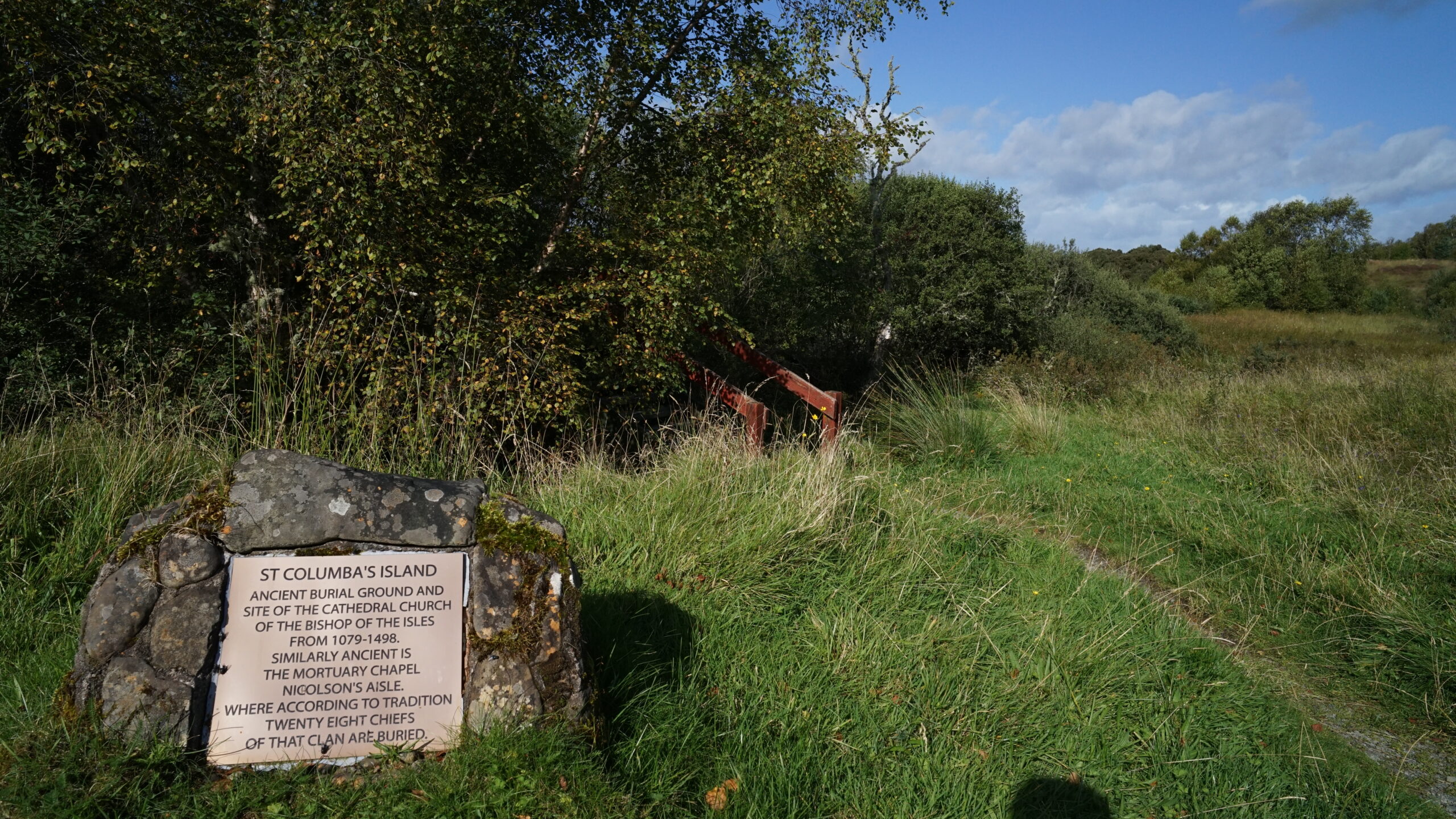
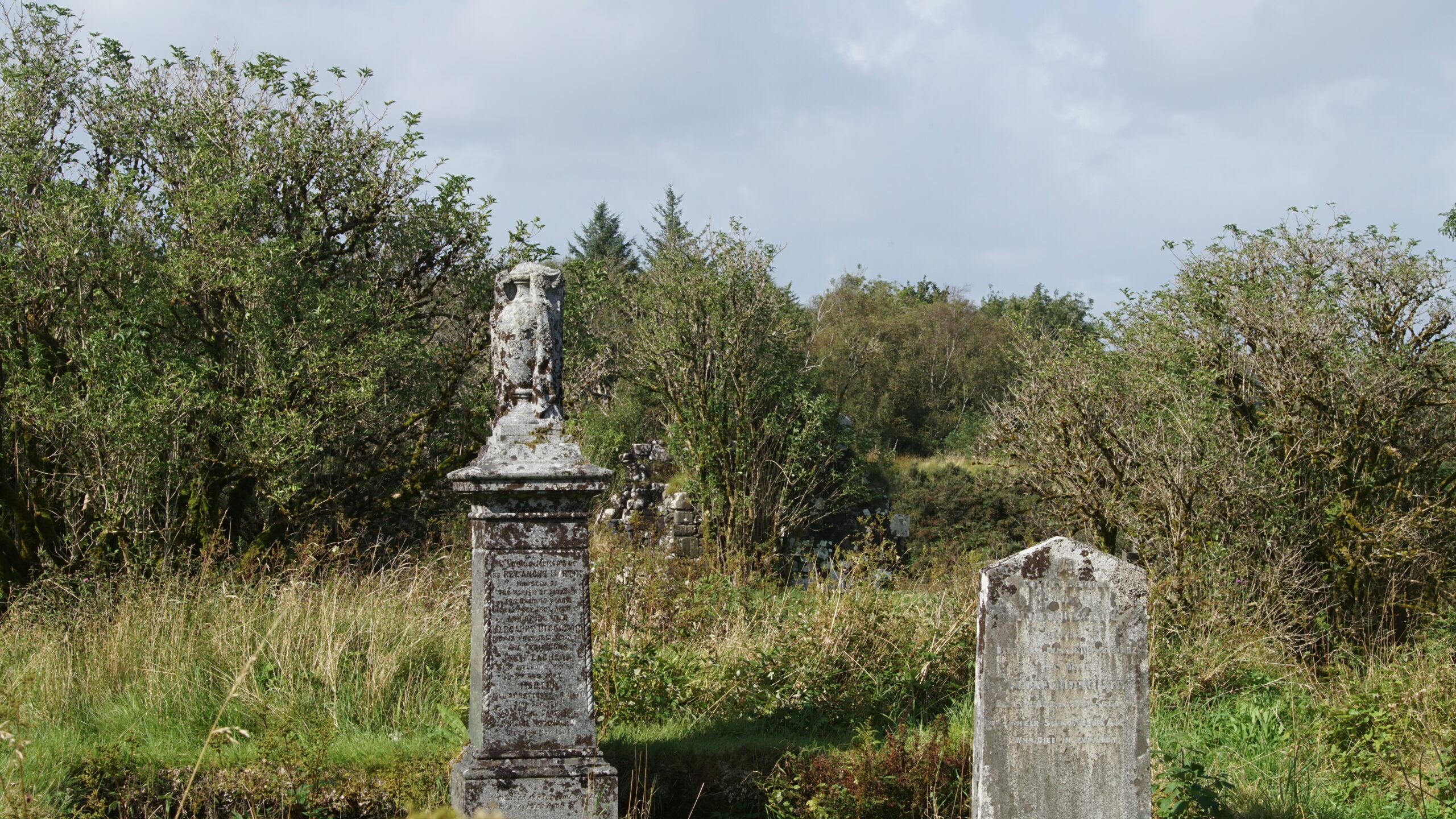
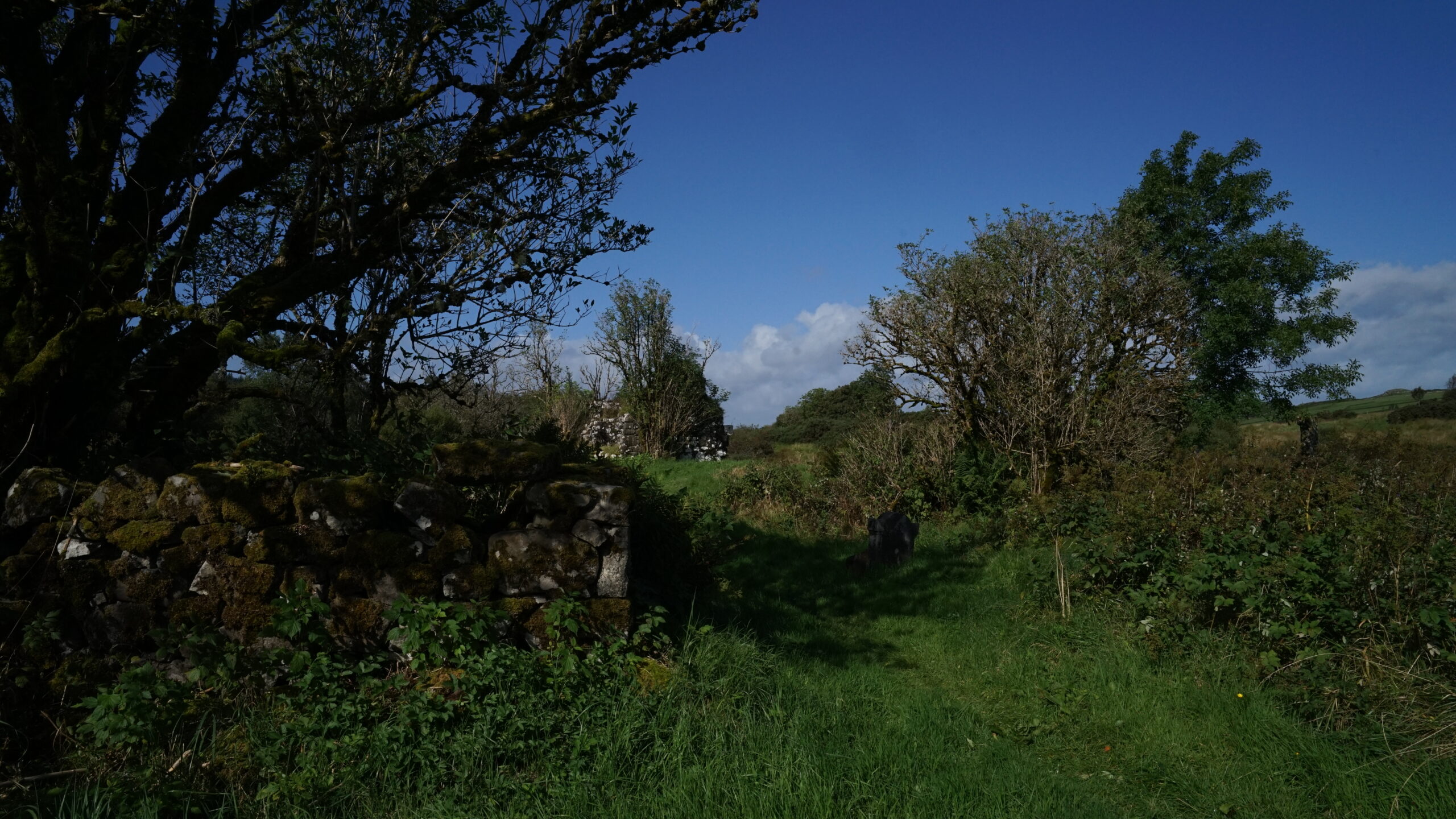
As I explore new places, I discover new stories. This time, my curiosity led me to a place about 6 miles from Portree and less than 50 miles from Eilean Donan Castle. As I mentioned above, this island is called St. Columba’s Island or Eilean Chalium Chille. On this island, there are ruins of very old buildings that once formed a monastery complex. It is enough to take in all these structures with a glance and enclose them within a wall that probably gave unity to all the buildings inside. From what remains, one can distinguish the ruins of Snizort Cathedral, Nicolson’s Alley and flat sculpture of a knight, which are extremely interesting. The whole place looks like a medieval cemetery where we can see very old tombstones, and I am not surprised that the ancestors of the island were buried in such an important and sacred place. Later in this article, I will describe these elements in more detail. Before that, however, one cannot overlook the importance of this place and the essence of this religious and historical centre, the significance of which I will describe in the next paragraph.
St. Columba’s Island was probably a very important centre even before the arrival of the missionary from Iona. My Highland intuition tells me that this was the site of a ritual place for the Pictish peoples. I do not know the details, but it was often the case that Christianity, in order to assert its religious control, built its foundations on earlier places of worship. It is possible that ancient monuments, newly marked with crosses, were used for construction. In this way, they absorbed earlier beliefs and incorporated them into their own system of faith. To show how important this place was, let me start with the moment when Columba set out on his mission to convert the Pictish pagans. He set out from his base on the Isle of Iona, which belonged to the early medieval kingdom of Dal Riata. Showing great courage, he crossed the mountains beyond which lay the warlike kingdom of the Picts (a people who loved tattooing). In the 6th century, he reached the Isle of Skye, considered by some to be the end and by others the beginning of the Atlantic world, where he preached from a rock on this very island on the River Snizort. From that time on, the fate of the island and this part of Scotland would take a completely different course.
THE SIGNIFICANCE AND IMPACT OF A SMALL ISLAND ON A LARGE AREA
The first evidence of the importance of the site on the Snizort River comes from a Norwegian document from the 11th century. It was the seat of a person variously referred to as the Bishop of Skye or Sodar (Sudereys, the southern or western islands of Scotland, as opposed to Nordereys, Orkney and Shetland). The bishopric was subject to the archdiocese of Nidaros, in other words Trondheim in present-day Norway. After the Battle of Largs in 1263, ties with Norway were severed and the Western Isles and the Isle of Man were transferred to Scotland. A new bishopric of Sodar and Man was created with its Cathedral in Pell on the Isle of Man. This was the result of the Scottish War of Independence. However, the Scots were driven out of the Isle of Man, and as a result, in 1327, twelve canons in Snizort elected Bernard Linden as bishop of the islands, the first of at least seven bishops who occupied the Cathedral on the island of St Columba.
At the height of the power of the lords of the islands and the bishopric of Skye, the controlled territories stretched from the west coast of Scotland and the western islands from the Mull of Kintyre to the north and as far east as Inverness. As you can see, the significance of the Cathedral Church on the island of St Columba was enormous, and to be honest, I would never have imagined that it could be the seat of bishops of such an important area. This ancient monastic complex was also the seat of Wymond (Hamaond), who was consecrated bishop of Skye in York in 1079. The only exception was when the bishopric was moved to the Isle of Man for 62 years. According to information from the Vatican, St. Columba’s Island was the main seat of the bishops of the Scottish Isles until 1498, when it was moved back to the Isle of Iona following a petition. This process was completed in 1540, and the cathedral was later demolished after the Reformation, with the stones being used for local construction. (What a pity!)
EVERYTHING IN RUIN ONCE MAJESTIC CHAPELS
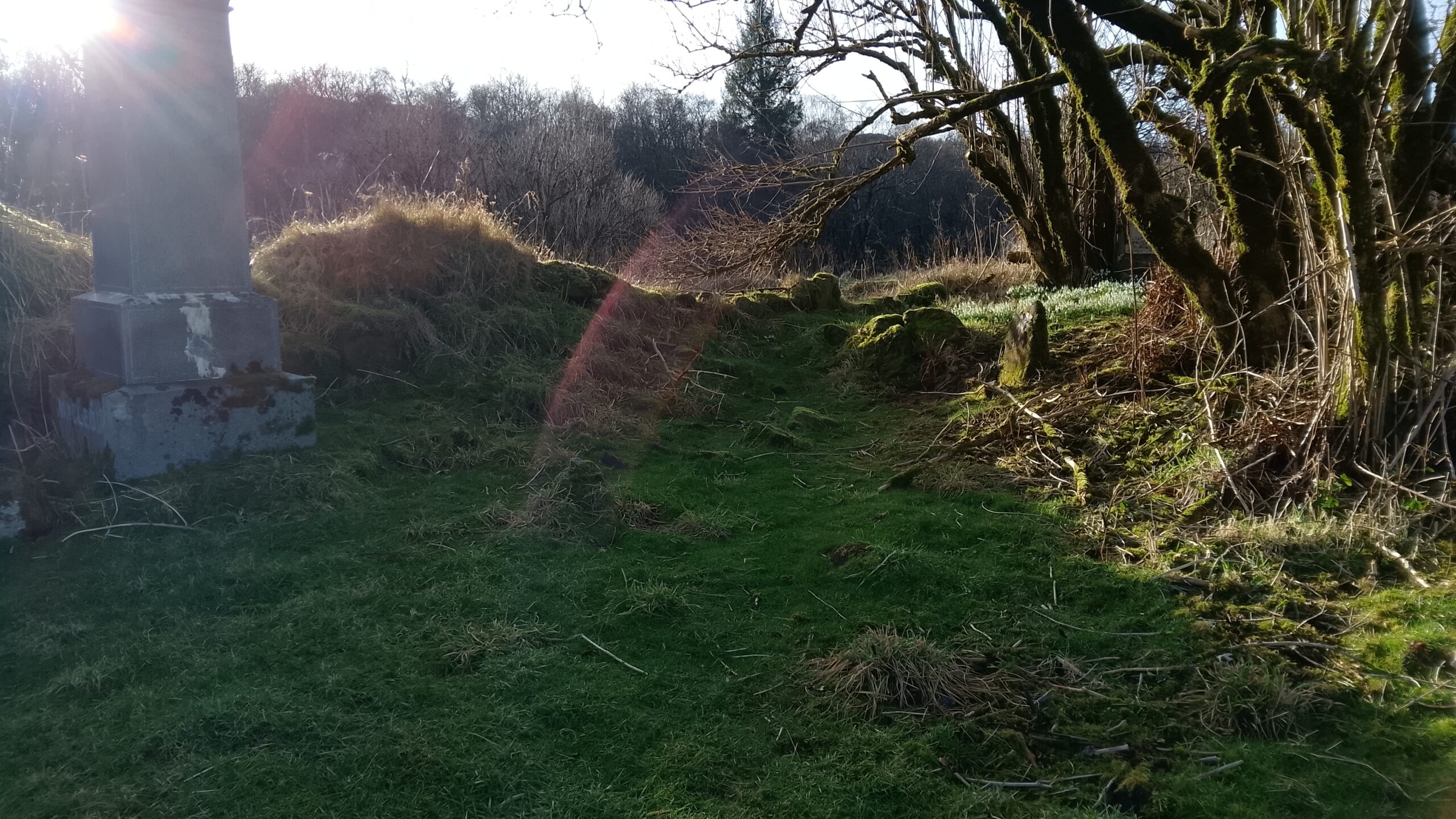
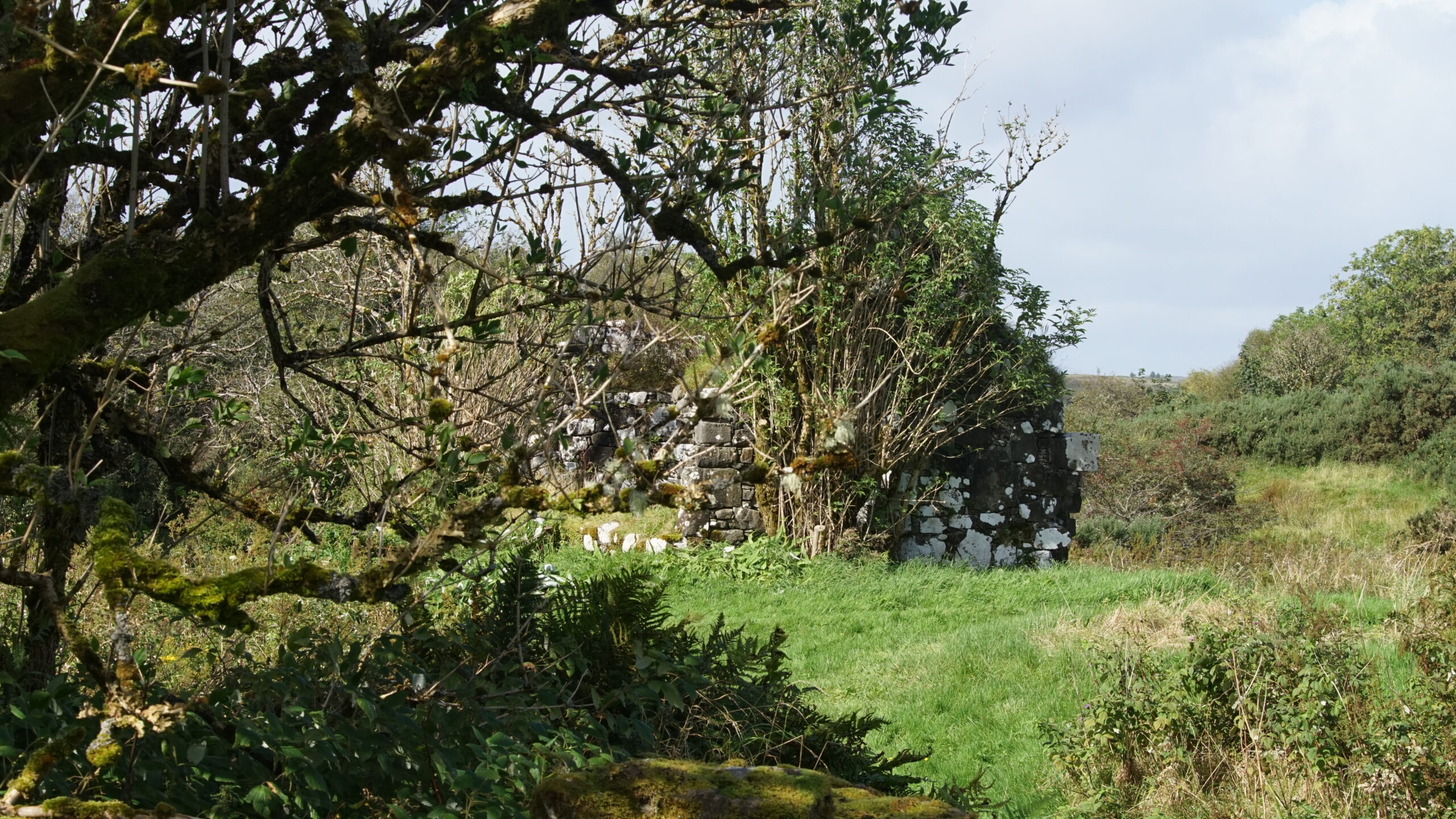
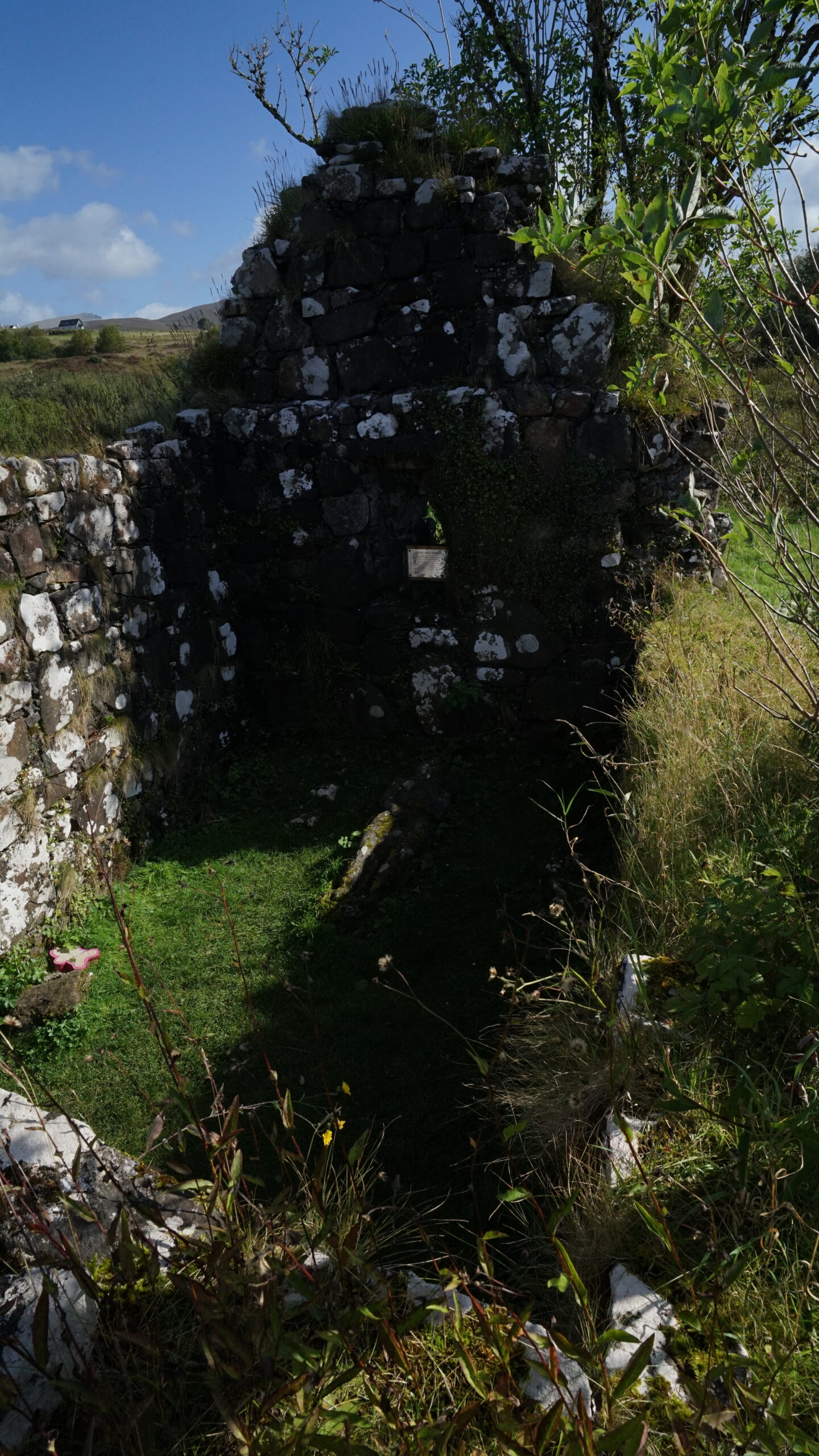
It is said that the first chapel on St Columba’s Island (Eilean Chaluim Chille) on the River Snizort was founded by St. Columba himself in the 6th century during his visit to the northern Picts. At that time, he also founded a chapel in Kilmuir, located a few miles to the north. There are two medieval chapels on the island. The 11th-century chapel on the west side is in ruins, while the second chapel on the east side is surrounded by a large rectangular fence. It was probably an old parish or cathedral from the 14th-15th century. The third building, located in the south-east, was a fence. The ruins of St. Columba’s Chapel, with its thick walls, are now roofless, but its gables still reach 3.5 metres in height, and the interior of the building is 5 metres long and 2.8 metres wide. Only one window has survived, and higher up on the walls you can see carved stone elements from the 13th century. There was probably a monastery here, but it is more likely that it was a bishop’s residence, as this small island was apparently the seat of the ‘bishops of the islands’. In its heyday, the larger chapel and its associated buildings were the size of a small cathedral, hence the name Skeabost Cathedral. We know that the chapel we see today was built in the late 11th or early 12th century, so it is not the same one built during the missionary’s time.
Nicolson's Aisle AND THE MYSTERIOUS FLAT SCULPTURE OF A KNIGHT
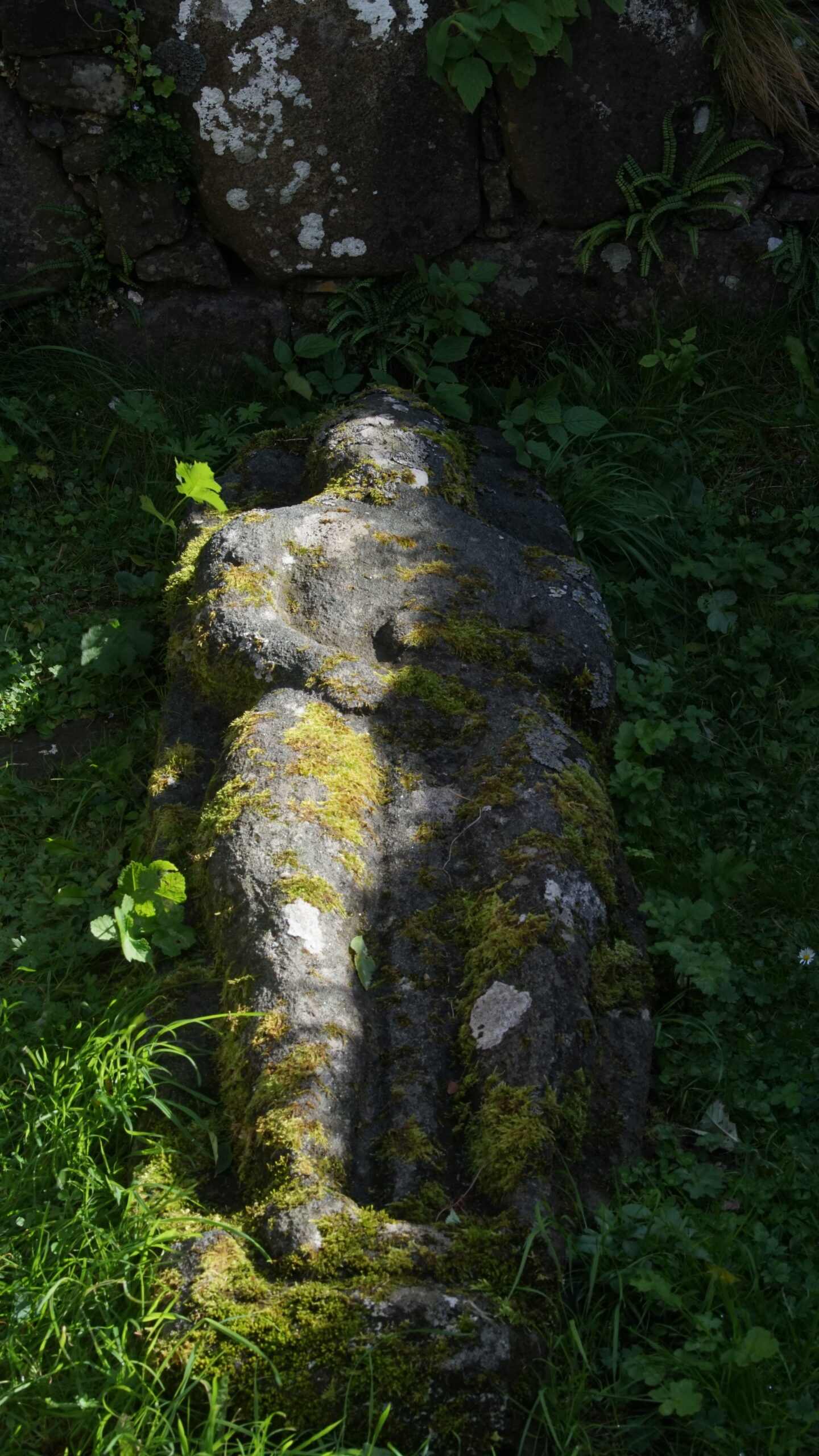
The Isle of Skye is undoubtedly linked to the MacNeacail clan and Nicolson’s Aisle (Aite Adhlaic Chloinn Necail), which is located on the island of St. Columba. According to tradition and records, 28 commanders of the MacNeacail clan were buried in this small cemetery chapel. Legend has it that the first chief could have been buried here as early as the late 12th century. This would not be surprising, as the Church wanted to connect with the community and the tribes wanted the honour of burying their leader on sacred ground. The construction of this burial chapel cannot be precisely dated because it has been repaired many times. It is estimated that it could not have been built earlier than the 16th century, when the ruins of the cathedral were used as stone material for its construction. Inside the chapel lies a 16th-century flat sculpture(efiigy) of a warrior Knight. An amazing, very old bas-relief caught my attention to such an extent that I decided to look for and ask more about it. It turns out that this effigy depicts a warrior in a tall conical helmet, holding a sword pointing downwards at his feet. It is believed to depict the then chief of MacNeacail, perhaps even the one who had connections with King James V in 1540. Until 1992, this mysterious chapel was in a state of total ruin and the bas-relief was displaced, lying in the chaos of the collapsed wall. During the tidying up and repair of the walls, elements of wine cups and bottles were found in the ground, indicating that the chieftain buried there was given a generous and liquid farewell. But that’s not all, history lovers. I found out a little more about the subject and it turns out that this bas-relief is associated with the MacNeacail clan, also known as MacNicol or the Christian Nicolsons, supposedly the oldest clan on the island, which owned significant lands in Scorrybreach but also in Trotternish. The history of this family is complicated but extremely interesting and worth exploring. It is said that its roots originate from the Nordic Scandinavians, just like other clans from the islands of Skye and Lewis.
FROM PICTISH RITUALS THROUGH CELTIC CHRISTIANITY
Summing up my historical trip to St. Columba’s Island on the River Snizort, I discovered not only a beautiful place but also a very important centre in a place where I would never have expected it. It was an important place and the seat of clergy and bishops who ruled over a large area. It was probably once a place of rituals, which was deliberately replaced by Celtic chapels. I wonder how much Christianity interfered with the old beliefs, and I guess that the older holidays of the natives were incorporated into the Christian calendar and their meaning changed. People’s stories were also adapted rather than discarded. On the Isle of Skye and the smaller islands, where fog and dramatic weather changes took place, obscuring and revealing the land and sea, such stories found fertile ground. They seemed to encourage the creation of convenient interpretations that served the interpreter, which was well suited to the new faith. From dark forts to stone-carved crosses, from sea routes used by warriors, traders and missionaries, the history of the Isle of Skye and the islet of St Columba is a story of change deeply rooted in the island’s identity. This history opens another historical door in the search for the past. I learned that the Gaelic language and the Christian faith were intertwined, and places such as the island of St. Columba became a kind of archive of these endless changes.
That’s all for this episode from the highlander, but don’t worry, I’ll be back soon with another story and new travels. It’s amazing how each story draws me deeper into learning more. The history of this island has inspired me to explore the subject further. I became interested in what the process of Christianisation and conversion of pagans might have looked like. I guess it wasn’t as rosy as the church says. I’ll be back soon with another article in which I’ll take a closer look at the history of this amazing island called Skye. Best regards, and I hope that through my articles you are getting to know yourself better.
Many thanks to the lady working in the archive on Skye for her help.
Sources that helped me in creating this material:
‘The Highland Clan MacNeacail’ (W. David H. Sellar and Alisdair Maclean)
‘History of Skye and The Small Isles’ (Bagtown Clans)