BATTLE OF Glen shiel
Let us transport ourselves to the year 1719 in Britain, a time when only scepticism reigned supreme. And though within the borders of this beautiful island there is nothing more praiseworthy, nothing more worthy of song than sincere faith, yet false faith – a religion that long ago took root in Geneva – is what is corrupting the world, ruining the British kingdom, saturating mountain waterfalls with crimson blood, tempts a wife to poison her husband, and generals to throw themselves upon a heap of dung; whilst Albion dons a false guise of piety and, through a wicked Pact, wages a shameful war, and rushes towards its own ruin, and Britain perishes, pierced by her own sword. I have decided to begin the account of this uprising in a dramatic and poetic manner, as I believe that these words capture the very essence of the Battle of Glen Shiel. But let us get to the point!!
In this battle, the Jacobite forces under the command of the Earl of Tulabardine clashed with the British troops led by General Wightman. To understand why this clash took place, it is crucial to understand the events on the continent which, like a strong chain, entangled and drew the northern peoples of Great Britain into the maelstrom of the uprising. As is well known, the entire Jacobite uprising is inextricably linked to the ‘Glorious Revolution’ of 1688 and the exile of the Catholic King of England and Scotland, James (VII–II). This subject is highly complex and dates back as far as 1537, to the reign of Henry VIII, who decided to establish his own church and reject the authority of the Holy See. I shall endeavour to describe in detail shortly the full nature of this schism, which divided the people and ushered in the new Anglican faith. I assure you it will be fascinating, and we shall learn about the clash and transformations between the new Protestant beliefs and Celtic Christianity. There is no doubt that the northern regions were strongly linked to the monastic Celtic worldview instilled by St. Columba in the 6th century AD.(More in near future)
The uprising of 1719 was the result of events in the ‘Quadruple Alliance’ war between Spain and the coalition of Austria, France, Great Britain and Savoy. In short, Spain had been reduced to a lesser power, having lost its territories following the Treaty of Utrecht in 1713. An example of such a territorial loss is Flanders (now Belgium). In 1718, Philip V of the House of Bourbon became King of Spain and immediately drew up a plan with the Council in Madrid. Working together with Cardinal Giulio Alberoni and the Duke of Ormond, they approved a plan to attack England, which was intended both to divert the attention of the British army and navy from operations on the continent and to launch a planned attack on London. At this point, the Spanish cause and the Jacobite cause converged. I get the impression that this is neither the first nor the last time the Stuart cause will be used as a decoy to achieve other objectives, which in this case are Spanish.
From the coast of Spain to Eilean Donan
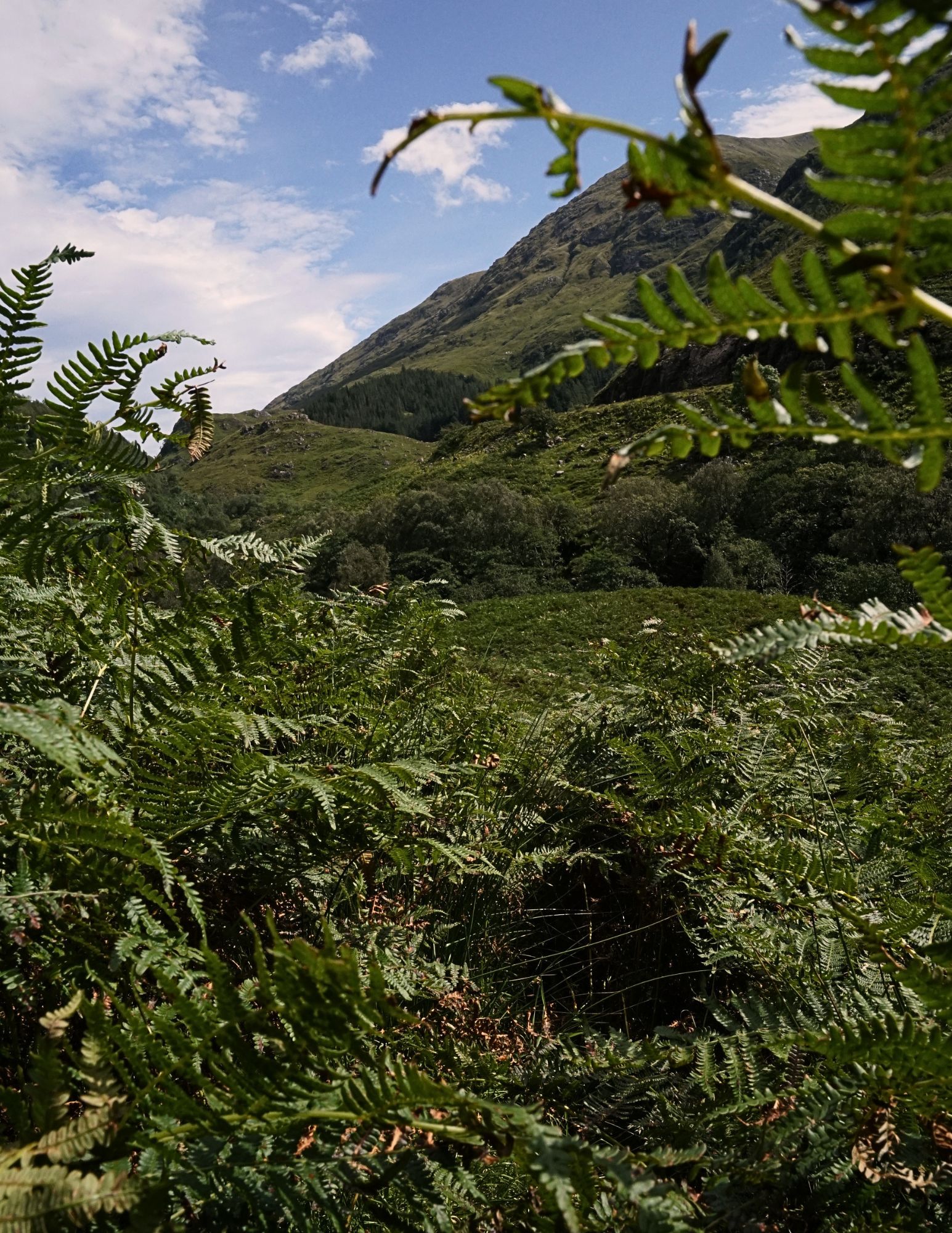
It is said that on 7 March 1719, three frigates set sail from the port of Pasajes bound for Scotland, carrying in their holds barrels of gunpowder, muskets from foundries in the Bay of Biscay, and over 300 soldiers from an Irish-Spanish regiment. Avoiding patrolling Royal Navy vessels and weathering the storms that had scattered the Spanish Armada week later, the Franco-Spanish elements of the expeditionary force met on 30 March at the port of Stornoway on the Isle of Lewis. Sometime around mid-March, a much larger fleet under King Philip Bourbon set sail from Spain with the aim of supporting the entire operation from the south. It comprised 6 destroyers and 20 transport ships carrying 6,000 soldiers. The expedition, which began in Cádiz, came to an end when it encountered a storm that scattered the entire fleet, as if in a battle between Zeus and Poseidon. Most of the ships sank into the depths of Poseidon’s realm, whilst the rest returned to ports on the Iberian Peninsula.
However, the council of war (comprising George Keith, Marquess of Tullibardine, Earl of Seaforth, and others) convened the following day in Stornoway revealed factionalism and strategic differences. After announcing his command, the Earl-Marshal G.Keith suggested that they head for the mainland and capture Inverness, proclaiming an uprising. This plan probably had a good chance of success, but the French faction, led by Tullibardine and the Earl of Seaforth, the most powerful Jacobite magnate in north-west Scotland, opposed it. They argued in favour of waiting for reliable news of Ormond’s landing in England. However, they were unaware of the tragic destruction of the fleet by a storm, which introduced a further element of uncertainty. Shortly afterwards, Tullibardine declared himself commander and set course for the MacKenzies’ stronghold at Loch Duich. In mid-March, he captured Eilean Donan Castle, which offered no resistance; in fact the castle commanders even welcomed the Jacobites with due honours. It is even said that a priest celebrated Mass throughout the castle, even consecrating the barrels of gunpowder. For most of the month, the expeditionary force consolidated its foothold. Together with local clansmen – mainly the MacKenzies of the Earl of Seaforth – they established outposts further afield, including one 13 miles south-east of the landing site, at Glenshiel Pass, which controlled access deeper into the interior.
The departure of Wightman’s troops from Inverness
The Jacobite situation deteriorated on the evening of 9 May, when Royal Navy ships anchored in Loch Alsh, a few miles from the bridgehead. On 28 April, a squadron of five warships (with a sixth due to arrive) had been detached from the fleet poised to intercept the Spanish Armada. The squadron was to sail immediately to the Western Isles and the Highlands to resist a Jacobite landing. Consequently, on 10 May, HMS Worcester, Enterprise and Flamborough, under the command of Captain Boyle, bombarded Eilean Donan Castle, after which landing parties captured the castle, where the Jacobites had established their main depot. The Spanish infantry garrison was taken prisoner, and the gunpowder – which the Royal Navy had failed to capture – enabled the sailors to partially destroy the castle by causing an explosion. On 10 April, the crew of HMS Flamborough also destroyed a secondary Jacobite arsenal on the shore of nearby Loch Duich.
With their remaining military supplies, the Jacobites retreated inland, but as the Spanish frigates had left the island a few days before the arrival of the British squadron, they were cut off – one might say, of their own accord . On 4 June, Tullibardine finally ordered a general uprising of the clans, and the Hanoverian propaganda spread far and wide in these very words: ‘The Papists are gaining a foothold in Kintale and corrupting the Highlanders with their idolatrous mass.’
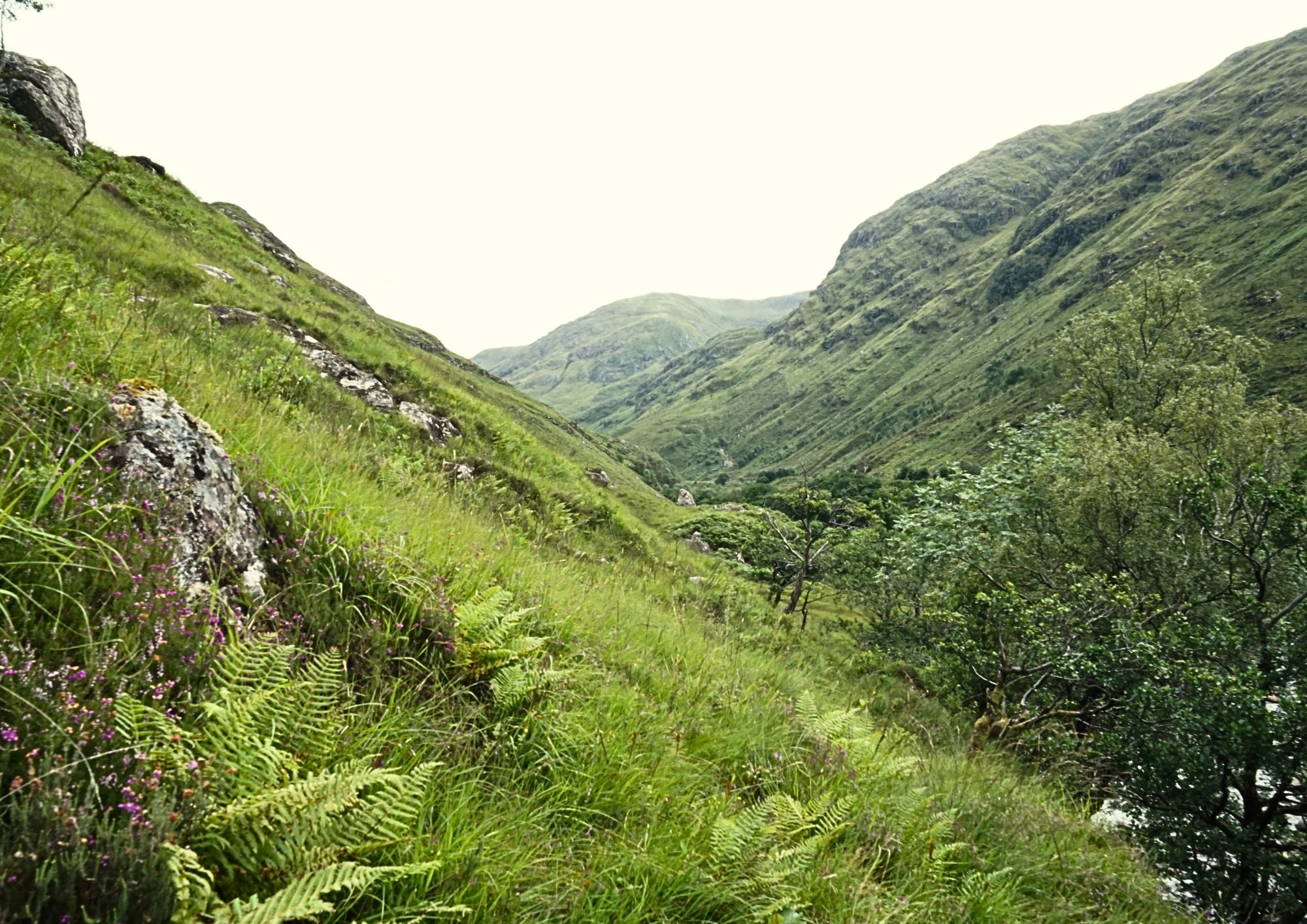
In the face of these events, government forces numbering around 1,230 men – including British and Dutch regulars and highlanders loyal to George I – under the command of Major-General Joseph Wightman, set out from Inverness. Rather than making their way through treacherous coastal inlets, he chose the central route via Corrieyarrick, then through the Great Glen and to Glen Shiel. On 9 June, he reached the Cluanie Lochs and set up camp amidst towering ferns, half-dampened by the rain. After conducting a reconnaissance, he spotted the future battlefield to the west of the River Shiel, at the narrowest point of the pass known during the battle as ‘Little Valley’. It is interesting to note that the Munro clan, which was on the government’s side, was an enemy of the MacKenzie clan, and it was this very clan that was sent out on reconnaissance using the deer trails.
CLASH BETWEEN THE JACOBITES AND GOVERNMENT FORCES
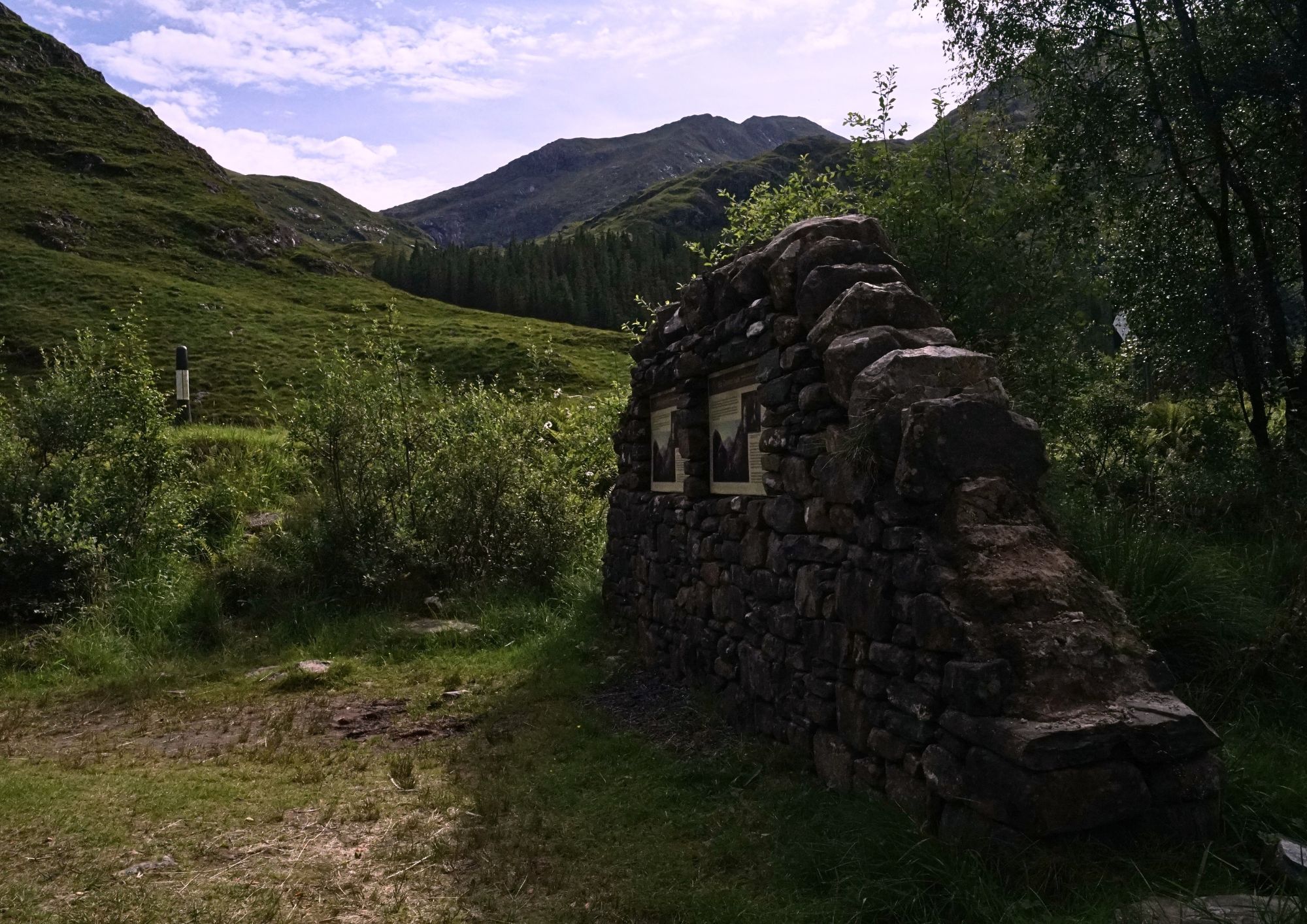
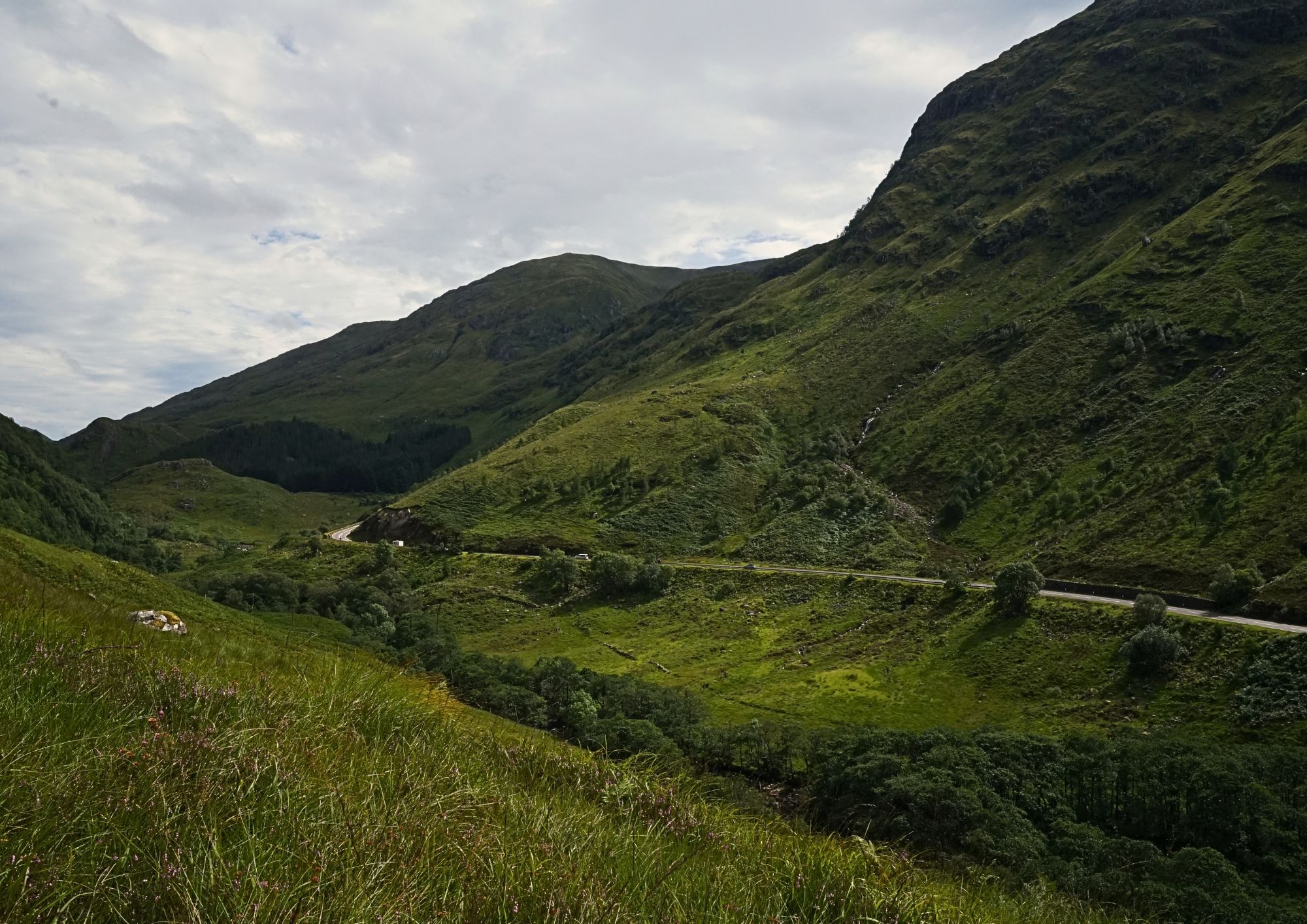
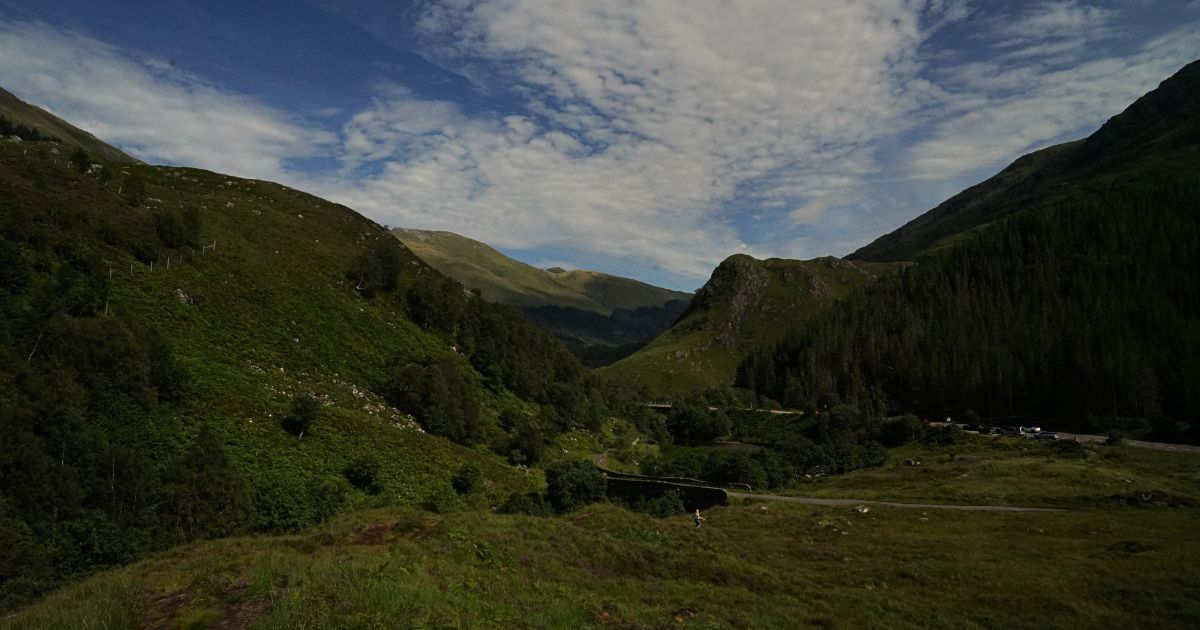
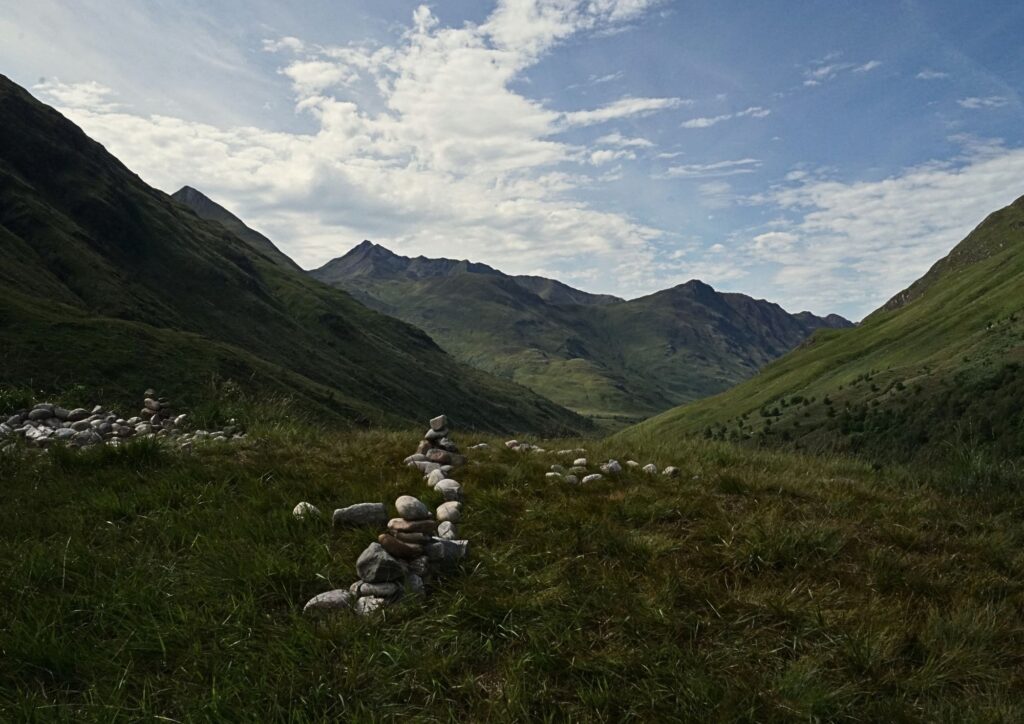
On 10 June 1719, the Jacobites, fielding a force of 1,000 clanmen and 254 Spanish marines, fought a bloody battle at Glenshiel against the government forces of General Joseph Wightman, who had 850 infantrymen, 120 dragoons and 4 batteries of mortars. To halt General Wightman, the Jacobites chose the narrow pass at Glenshiel – previously referred to as a ‘small valley’ – erecting barricades along the road and on the hill overlooking it. Meanwhile, the Spaniards took up positions on a fortified hill situated directly to the north of the road. On 10 June, Wightman launched his final assault after leaving his camp near Loch Cluanie. The Jacobites, who had been waiting there since 8 June, were deployed on both sides of the valley, with their right flank situated on a hill jutting out from the steep slopes to the south of the river. The battle began at 5.00 pm, when Wightman set off with his dragoon cavalry towards the Jacobite positions in the central section of the road, situated in its northern part. The cavalry was accompanied by mortars, which, upon reaching a point almost directly opposite the Jacobites’ right flank, opened fire towards the hillock on which the forward outpost was situated. Immediately following the mortar barrage, four platoons from Clayton’s and Munro’s regiments, deployed on the left flank of the line, launched their attack. It took several attempts to drive the Jacobites from their stronghold. Initially, they withdrew behind the ridge to the west of the hill, but despite attempts by Lord George Murray, McDougall and Avoche to rally their men, they eventually began to flee westwards along the steep slopes of the valley. Meanwhile, Coehorn’s mortars were directed against the Spanish positions on the fortified promontory on the northern slopes of the valley, as well as against the Jacobite barricade blocking the road below the Spanish citadel.
The bombardment failed to drive out the enemy, so thirty-five dragoons launched an attack. This attack, which evidently met with strong resistance, was supported at the foot of the hill by Clayton’s and Munro’s regiments, which crossed the river and successfully assaulted the barricade. The main forces of the government army, comprising Harrison’s and Huffel’s regiments along with the grenadiers, advanced up the northern slopes of the valley to engage the Jacobite left wing, which stretched along the northern slopes higher up and further (to the east) than the Spanish positions. The government troops, who had to climb a fairly steep slope, first encountered Seaforth’s group on their left, where the soldiers were able to take cover behind the rocks. During the exchange of fire, Seaforth was wounded in the arm, and the left flank began to retreat, despite the efforts of Rob Roy and the Mackinnon clan, who had come to their aid. Rob Roy’s men, seeing Seaforth’s retreating detachment, followed in their footsteps, along with the Cameron clan, who had been sent up the hill from the centre. A general retreat of the Jacobite line soon ensued, culminating in a rout. Despite the Jacobites’ strong position, the relentless assault by government forces, combined with the lack of experience among most Jacobite units in firing their weapons and maintaining formation, secured victory for the government forces. You can find more detailed information on the course of events on this website I recommend . Let us now move on to the summary, which is of crucial importance for the further developments in this never-ending saga of the Jacobites’ insurrectionary endeavours.
THE AFTERMATH OF THE BATTLE! IS THIS THE END OF THE JAcOBITES UPRISINGS?
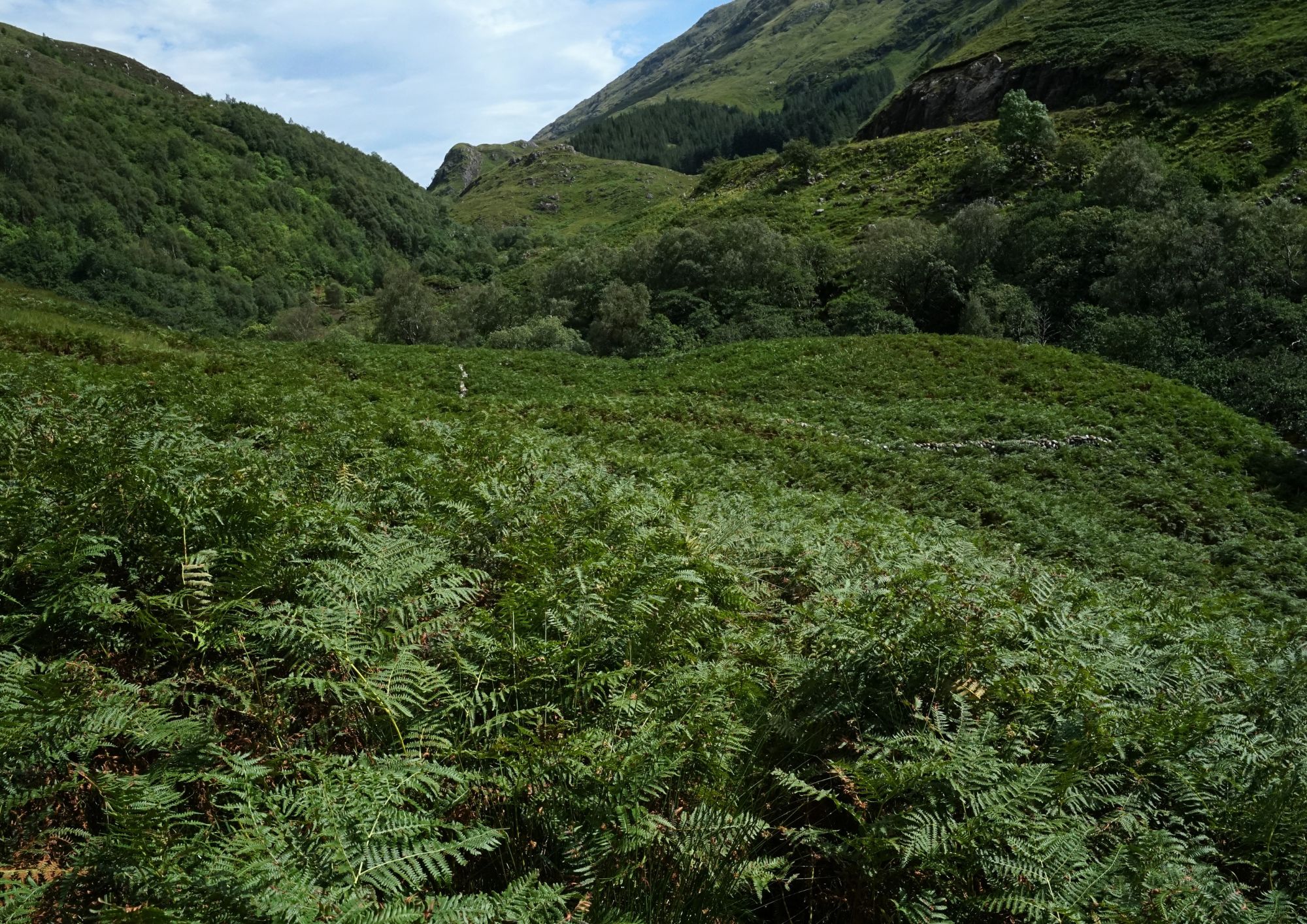
Casualties following this battle, which lasted a mere three hours, were relatively low. There were 90 wounded or killed on Wightman’s side and 120 on the Jacobite side. After surrendering, the Spanish marines were taken prisoner and, following a march to Edinburgh, were exchanged for prisoners of war. The commander of Seaforth, bleeding, fled to the western islands, and his estates were seized by the Hanoverian government. The remaining Jacobite clansmen scattered under cover of night towards Lochaber, Moidart and Atholl. News of the Jacobites’ defeat at Glen Shiel reached London very quickly, where Walpole described the rebellion as ‘a wasp crushed in its hive’. Meanwhile, in Madrid, Cardinal Alberoni, under pressure from the ruling powers, resigned; and so it can be said that the Spanish dream of conquest died on the slopes of Glen Shiel in Kintail. In this skirmish, a small cannon known as the ‘Coehorn mortar’ was used for the first time; it dealt a significant blow and may even have tipped the balance in favour of victory. I hope that one day I’ll get the chance to test, or at least see, this little gem. Surprisingly, the Hanoverian government’s repression of the Jacobites was not severe, as it was feared this might provoke further unrest. Instead, the Amnesty Act of 1721 offered pardon to rebels willing to swear allegiance – a shrewd complement to Wade’s ‘pacification routes’, which would soon cut across the Great Glen.
10 June 1719 was the birthday of James Francis Edward Stuart, on which he was reminded once again that, without a major offensive by combined forces, the Highlanders’ zeal alone would not be enough to overthrow the dynasty from the mainland. This event became the stuff of legend, and Spanish coins – ‘pieces of eight’ – came into circulation in the Highlands, whilst the columns and globe depicted on them were mistakenly regarded as mysterious symbols of the Stuart dynasty. Even the University of Salamanca has preserved the regimental banners, which were pierced during the Battle of Glenshiel, and displays them on St Patrick’s Day as mementoes of Irish valour. This minor battle had major consequences on the European stage. Madrid was isolated, and papal funds intended for the Jacobites were redirected to missions in China. James himself went into hiding in Rome and found solace in the liturgy and heraldic processions – in exile, he revived the Order of Ost, whose knights, clad in their robes, strode through the corridors of the Palazzo Muti, their swords glinting in the glow of the Roman chandeliers. It should not be forgotten that shortly after this battle, a year later, the young Prince Bonnie Charlie was born. I have personally traced his story and recommend it as a read.
For some, this brief battle has been forgotten, but for me it is very significant and will always remain in my memory. Besides, I reckon it’s not just me – apparently, stories have been told of brave highlanders, of Spanish gold hidden in caves, of a run of bad luck with storms, and of an idea that a good man will always fight for. The story of Glenshiel is not just about the battle, but also about the place where the young pretender hid after his defeat at Culloden. This beautiful spot is not far away, and I’ve found a trail leading there. If you’re interested in this story, I invite you to read on. However, I’ll say goodbye for now, but I can assure you this is only the beginning !!!